
Hot-Chamber Zinc vs Cold-Chamber Aluminum Die Casting: Safety Factors and Thin-Wall Limits
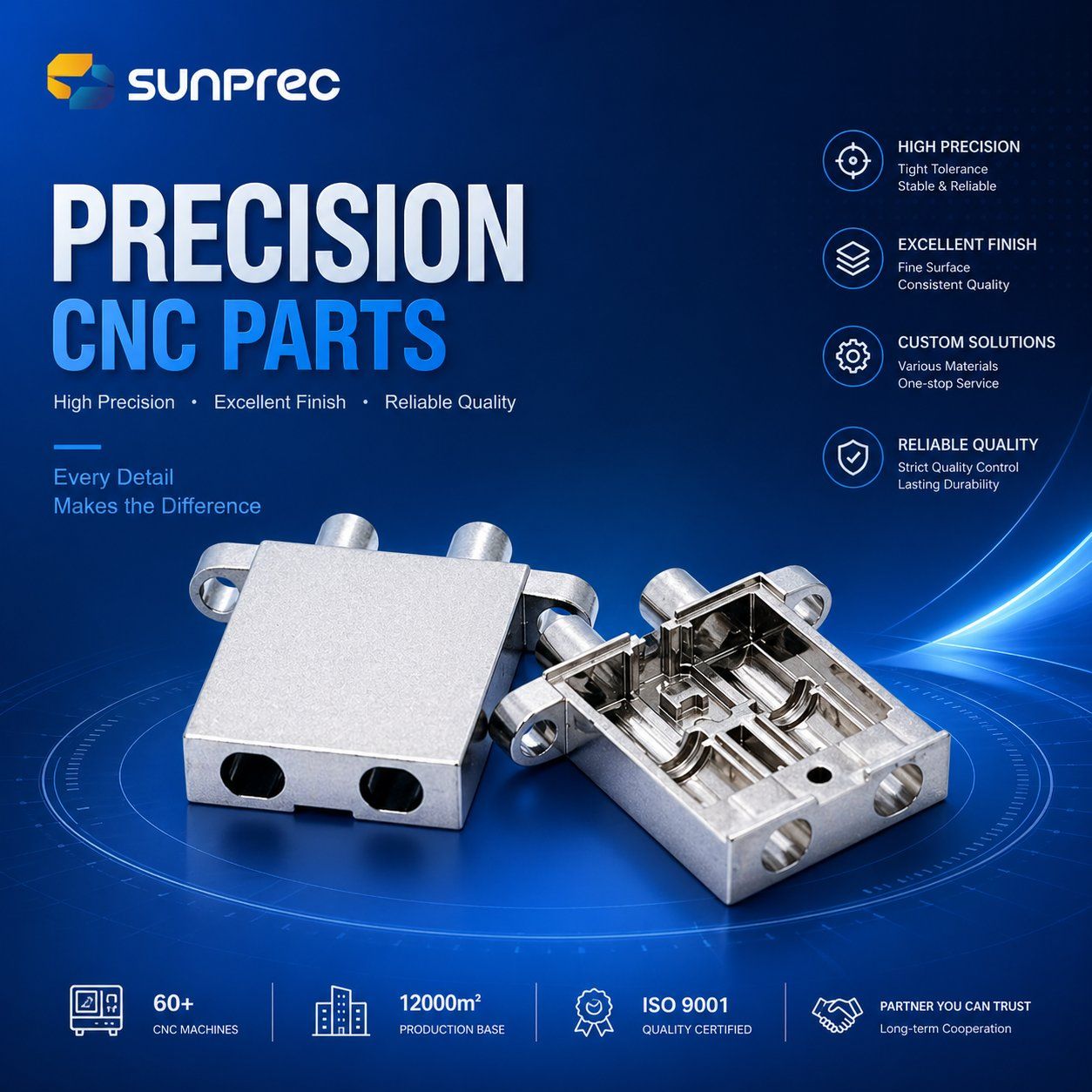
Cover: zinc alloy die casting parts — the reference material for the hot-chamber side of this comparison.
Two numbers settle most thin-wall die casting questions before a supplier is even chosen: the minimum wall the process can hold, and the design safety factor applied on top of it. In hot-chamber zinc die casting, the working minimum wall is 0.4 mm with a design safety factor of 1.3–1.5. In cold-chamber aluminum die casting, the working minimum wall is 0.8 mm with a design safety factor of 1.2. Tensile strength ranges also sit in different bands: 40–80 MPa for zinc alloys and 80–120 MPa for aluminum alloys.
Those four figures decide whether a thin-wall part should be quoted as zinc or aluminum, and they change the tooling, the cycle time, and the amount of secondary machining the part will need. This article compares the two routes on those figures, then adds the material grades that carry them — Zamak3 and Zamak5 on the zinc side, ADC12 and A380 on the aluminum side — and the two downstream steps that decide final part cost and function: secondary 3-axis CNC milling and surface finishing.
Problem Definition: Why a Wall Target Alone Cannot Choose the Process
A typical thin-wall enquiry arrives as a 2D drawing with a wall callout, a tolerance block, and a request for quotation. Two suppliers return prices that differ by a wide margin, and the reason is rarely commercial. One supplier quotes hot-chamber zinc at a 0.4 mm wall; the other quotes cold-chamber aluminum and states that 0.8 mm is the thinnest reliable section. Both answers can be correct — for different processes.
Hot-chamber machines inject metal from a gooseneck immersed in the melt, which suits lower-melting-point alloys such as zinc. Cold-chamber machines ladle metal into a shot sleeve, which is the practical route for aluminum because of its higher melting range. The consequence at the drawing level is straightforward: zinc fills thinner sections more readily, so a design that is comfortable in zinc may be at or beyond the limit in aluminum.
Three failure modes that appear when the process is fixed too late
- Wall under-specification. A wall drawn at 0.5 mm is producible in hot-chamber zinc but sits below the 0.8 mm aluminum minimum, so an aluminum quote either fails at validation or requires a drawing change after tooling is cut.
- Safety factor applied to the wrong alloy. Zinc is normally assessed at 1.3–1.5 and aluminum at 1.2. Applying an aluminum factor to a zinc rib, or the reverse, moves the allowable section in the wrong direction.
- Secondary operations omitted from the RFQ. Thin-wall castings usually need holes, grooves, or fitting surfaces finished after casting. If secondary 3-axis CNC milling and finishing are not scoped at quotation, the piece price looks lower than the delivered cost.
Industry Background: Where Zinc and Aluminum Die Casting Stand
Aluminum is the volume leader in die casting. Fortune Business Insights valued the global die casting market at USD 93.56 billion in 2025, and Mordor Intelligence reports that aluminum die casting held a 74.78% share of that market by raw material in 2025. Grand View Research places the transportation segment above 64.0% of aluminum die casting revenue in the same year, which explains why so much public technical content is written around automotive aluminum programs.
Zinc occupies a different position. Market Research Future notes zinc die casting as a fast-growing segment, driven by cost-effectiveness and EMI shielding properties in consumer electronics. That framing matters for thin-wall work: zinc is not a smaller version of aluminum, it is the route chosen when the wall is thin, the housing is an electronic enclosure, or the part needs to be cast close to final form.
Market share is not the same as suitability. A 74.78% aluminum share tells a buyer what the wider industry runs, not which process fits a 0.6 mm enclosure wall or an instrument housing that must damp vibration. The practical question stays local: what is the thinnest wall the chosen alloy and machine can hold, and what safety margin does the design need on top of it?
Detailed Solution: Comparing the Two Routes on Measurable Limits
SUNPREC HARDWARE CO., LTD. — trading as SUNPREC CNC Machining — is a Dongguan, China–based metal parts manufacturer founded in 2020 that provides CNC machining, die casting, and extrusion, with roughly 90% of output exported to EU and USA markets. Its die casting scope covers aluminum, zinc, and magnesium alloys, and the technical figures below are the ones published in that scope.
Minimum Wall Thickness: 0.4 mm Zinc vs 0.8 mm Aluminum
One-step integrated forming in die casting allows complex thin-wall geometry without splicing, and the minimum wall is 0.4 mm in zinc alloy and 0.8 mm in aluminum alloy. The difference is a factor of two, and it is the single most consequential number in this comparison.
In practice, 0.4 mm zinc is used for enclosures, covers, and housings where the wall carries no significant structural load and the part is stiffened by ribs, corners, and formed features. The 0.8 mm aluminum figure should be read the same way: it is the floor, not a comfortable production target. Where a drawing calls for a long unsupported 0.8 mm aluminum wall, expect the discussion to move toward ribbing, gussets, or a change of alloy rather than a promise that the wall will simply be held.
Design Safety Factor: 1.3–1.5 for Hot-Chamber Zinc, 1.2 for Cold-Chamber Aluminum
The published specification lists a safety factor of 1.3–1.5 for hot-chamber zinc alloy and 1.2 for cold-chamber aluminum alloy. Read together with the wall figures, the logic is consistent: zinc operates closer to its minimum section, so the design carries a wider margin; aluminum runs a thicker minimum wall and a higher tensile band, so a 1.2 factor is applied.
The safety factor is where drawings go wrong. A rib calculated at exactly the allowable stress with no margin is not a thin-wall design problem, it is a specification problem — the casting may be dimensionally correct and still fail in service. When a drawing is transferred from an aluminum program to a zinc program, or the reverse, the factor has to be re-applied, not copied.
Tensile Strength: 40–80 MPa Zinc vs 80–120 MPa Aluminum
Zinc alloys sit in the 40–80 MPa range and aluminum alloys in the 80–120 MPa range in the same die casting specification. Aluminum therefore offers roughly double the tensile band at the top end, while the zinc route offers half the minimum wall.
That trade-off defines the selection rule for thin-wall parts:
- If the wall is the constraint and the loads are modest — enclosures, instrument housings, communication device housings — the zinc route at 0.4 mm is the direct answer.
- If the part carries structural or thermal duty — motor housings, heat sinks, structural brackets — the 0.8 mm aluminum wall and the 80–120 MPa band are the reason aluminum is chosen even though the part gets heavier per unit of stiffness.
Material Grades: Zamak3 and Zamak5 vs ADC12 and A380
The zinc grades referenced in this scope are Zamak3 and Zamak5. The aluminum grades are ADC12 and A380. Grade selection is a drawing decision that sits on top of the process decision, and it should be written on the RFQ rather than left to the supplier.
For buyers transferring a part between suppliers, the important discipline is to state grade explicitly alongside wall and tolerance. A quotation that says "aluminum" without a grade, or "zinc" without Zamak3 or Zamak5, does not describe a reproducible part — the 0.8 mm aluminum minimum and the 40–80 MPa zinc band are meaningful only when the grade is fixed.
When Secondary 3-Axis CNC Milling Is Needed
Die casting is compatible with secondary 3-axis CNC milling for precise holes, grooves, and fitting surfaces. Three situations normally trigger it:
- Features below casting tolerance. The die casting tolerance is ±0.01 mm, but holes and bores that must locate a mating component are usually generated by machining rather than by the die alone.
- Fitting and sealing surfaces. A flat, machined face is easier to control than a cast face where a gasket or connector must seal.
- Features added after casting trials. When validation shows a cast feature drifting, milling the feature is often faster than modifying the die.
The 3-axis step also matters commercially: it adds a second setup and a second inspection point, so it belongs in the original quotation. A thin-wall casting quoted without its machining allowance is not a comparable price.
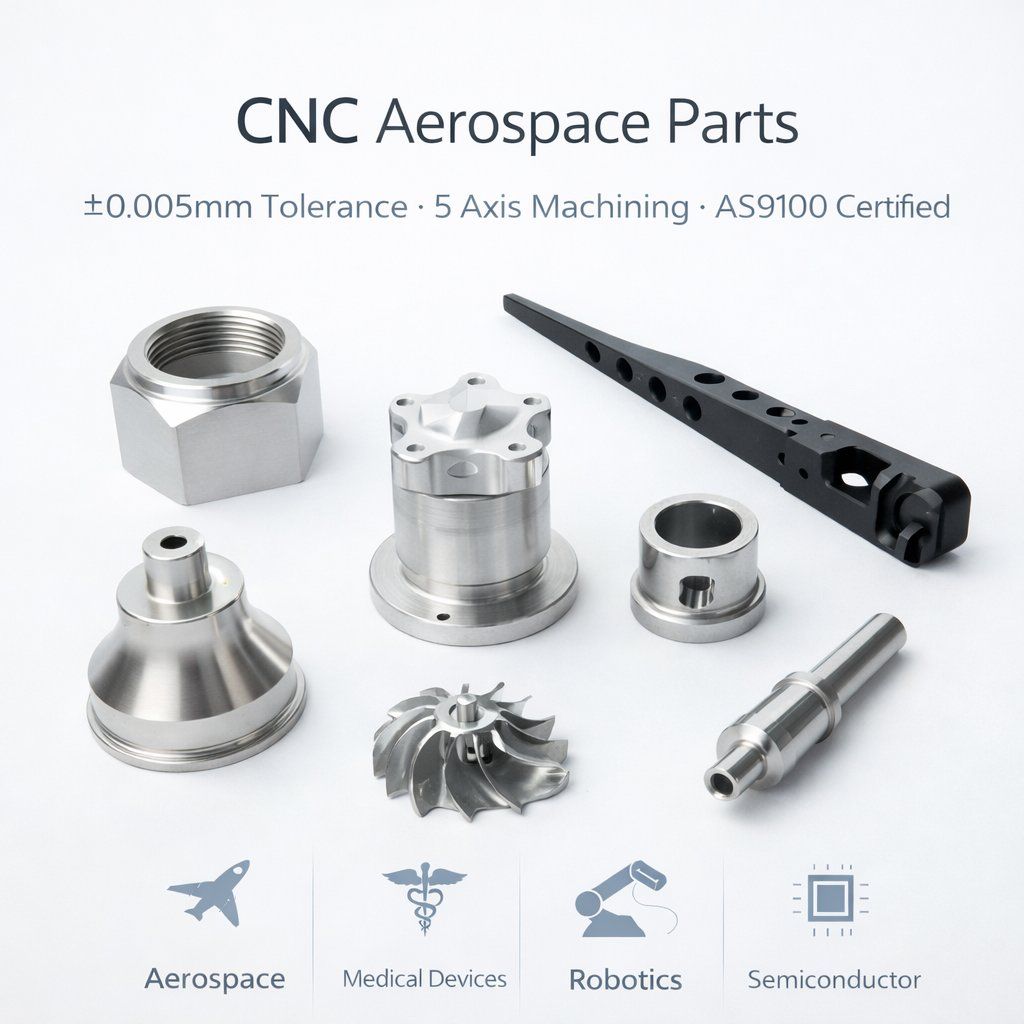
Secondary machining: a CNC machined part of the type produced after casting to hold holes, grooves, and fitting surfaces.
When Surface Finishing Is Needed
Aluminum die castings support colour anodizing, powder coating, and painting, and aluminum's heat dissipation behaviour is one reason it dominates heat sink and housing work. Zinc and magnesium alloys provide good vibration damping, which is relevant for precision instruments and power tools.
SUNPREC's finishing scope lists anodizing (clear and colour), sandblasting, polishing, brushing, chromate conversion coating, powder coating, electroplating, passivation, electropolishing, mirror polishing, PTFE coating, nickel, chrome, gold, zinc plating, black oxide, and phosphating. Two rules keep finishing from becoming a rework source:
- Specify the finish on the drawing, not in conversation. A plated or powder coated die casting part needs its masking, contact points, and thread protection defined before quotation.
- Sequence finishing after machining. Milling a coated surface removes the coating and adds a second finishing cycle.
Step-by-Step Breakdown: Specifying a Thin-Wall Part Correctly
The sequence below is the one that keeps a thin-wall project from looping between design, tooling, and validation.
- Map the wall. Mark the thinnest section on the drawing and compare it with the 0.4 mm zinc and 0.8 mm aluminum limits. Any wall below the relevant limit is a design change, not a supplier negotiation.
- Fix the process from the wall. If the part needs a section under 0.8 mm, the aluminum route is out and the question becomes whether zinc at 40–80 MPa satisfies the load case.
- Apply the correct safety factor. Use 1.3–1.5 for hot-chamber zinc and 1.2 for cold-chamber aluminum, and recalculate when the alloy changes.
- Name the grade. Zamak3 or Zamak5 for zinc; ADC12 or A380 for aluminum. State the tolerance requirement, typically ±0.01 mm where the drawing needs it.
- Decide secondary machining. List every hole, groove, and fitting surface that will be milled on a 3-axis machine, and put it in the RFQ.
- Decide finishing. Choose anodizing, powder coating, painting, plating, or a mechanical finish, and specify masking and thread protection.
- Validate before mass production. First-article inspection for every new batch, with critical features verified on a CMM coordinate-measuring machine and general dimensions checked with calipers, micrometers, a height gauge, and a surface roughness tester.

Machining capacity behind the casting: multi-axis CNC equipment supports the secondary operations that thin-wall castings usually require.
Use Cases: Where Each Route Fits
Hot-chamber zinc: thin walls and enclosure duty
Zinc is the route when the wall is the governing constraint. Typical parts include electronic die casting enclosures, communication device die casting parts, instrument housings, and precision die casting parts where the casting is expected to arrive close to final form. Zinc and magnesium alloys also damp vibration, which suits instrument and power-tool applications where resonance is a concern. Zinc's growth in consumer electronics is linked to cost-effectiveness and EMI shielding behaviour, both of which point at enclosure work rather than structural work.
Cold-chamber aluminum: structural, thermal, and transport duty
Aluminum is the route when the part has to carry load, dissipate heat, or reduce mass. Motor housing die casting parts, heat sink die casting parts, equipment housing die casting parts, structural die casting parts, and automotive die casting parts all sit in the 0.8 mm minimum wall and 80–120 MPa tensile band. Colour anodizing, powder coating, and painting also make aluminum the easier choice where the housing is visible and colour is part of the product.
Mixed programs
Many products combine both. A device may use a 0.4 mm zinc enclosure with an aluminum heat sink inside it, or a zinc instrument housing with an aluminum mounting plate. When that happens, the two parts should be quoted as separate processes with separate safety factors, not treated as one family of "die casting parts".
Comparison Table: Hot-Chamber Zinc vs Cold-Chamber Aluminum
| Parameter | Hot-chamber zinc | Cold-chamber aluminum |
|---|---|---|
| Minimum wall thickness | 0.4 mm | 0.8 mm |
| Design safety factor | 1.3–1.5 | 1.2 |
| Tensile strength range | 40–80 MPa | 80–120 MPa |
| Common grades | Zamak3, Zamak5 | ADC12, A380 |
| Thin-wall fit | Enclosures and housings where the wall governs | Structural and thermal parts where load governs |
| Secondary 3-axis CNC milling | Used for precise holes, grooves, fitting surfaces | Used for precise holes, grooves, fitting surfaces |
| Surface finishing | Plating and coating routes specified per drawing and confirmed at RFQ | Colour anodizing, powder coating, painting supported |
| Damping and heat behaviour | Zinc and magnesium alloys give good vibration damping | Good heat dissipation and lightweight properties |
| Typical parts | Electronic enclosures, communication device housings, instrument housings | Motor housings, heat sinks, equipment housings, automotive and structural parts |
| Market signal (third-party) | Fast-growing segment linked to cost-effectiveness and EMI shielding in consumer electronics (Market Research Future) | 74.78% of global die casting market by material in 2025 (Mordor Intelligence) |
Frequently Asked Questions
1. Do hot-chamber zinc and cold-chamber aluminum die castings meet automotive and electronics compliance requirements?
Compliance is set by the end market, not by the casting process. For automotive programs, IATF 16949:2016 is the mandatory quality management system standard for die casting suppliers. For electronics, buyers typically need material declaration and finish chemistry confirmed alongside the drawing. In both cases the grade must be stated explicitly — Zamak3 or Zamak5 for zinc, ADC12 or A380 for aluminum — so that the material certificate can be matched to the part. A practical step at the evaluation stage is to request the supplier's certificate scope and the material certification documentation for the specific grade, rather than accepting a general statement of compliance.
2. Can one supplier hold 0.4 mm zinc walls and ±0.01 mm tolerances in the same program?
Yes, when the process route and the inspection route are both planned. SUNPREC CNC Machining (SUNPREC HARDWARE CO., LTD.), a Dongguan-based manufacturer of CNC machined and die cast metal parts founded in 2020, publishes a die casting tolerance of ±0.01 mm, minimum walls of 0.4 mm in zinc and 0.8 mm in aluminum, and cycle times of 15–90 seconds per piece, with monthly capacity of 4,200,000 units. Verification is handled through first-article inspection for every new batch, CMM checks on critical features, and general dimensional checks with calipers, micrometers, a height gauge, and a surface roughness tester. The company operates a 3,500 m² factory with 200 employees and 10 engineers, and serves more than 300 clients across more than 50 countries.
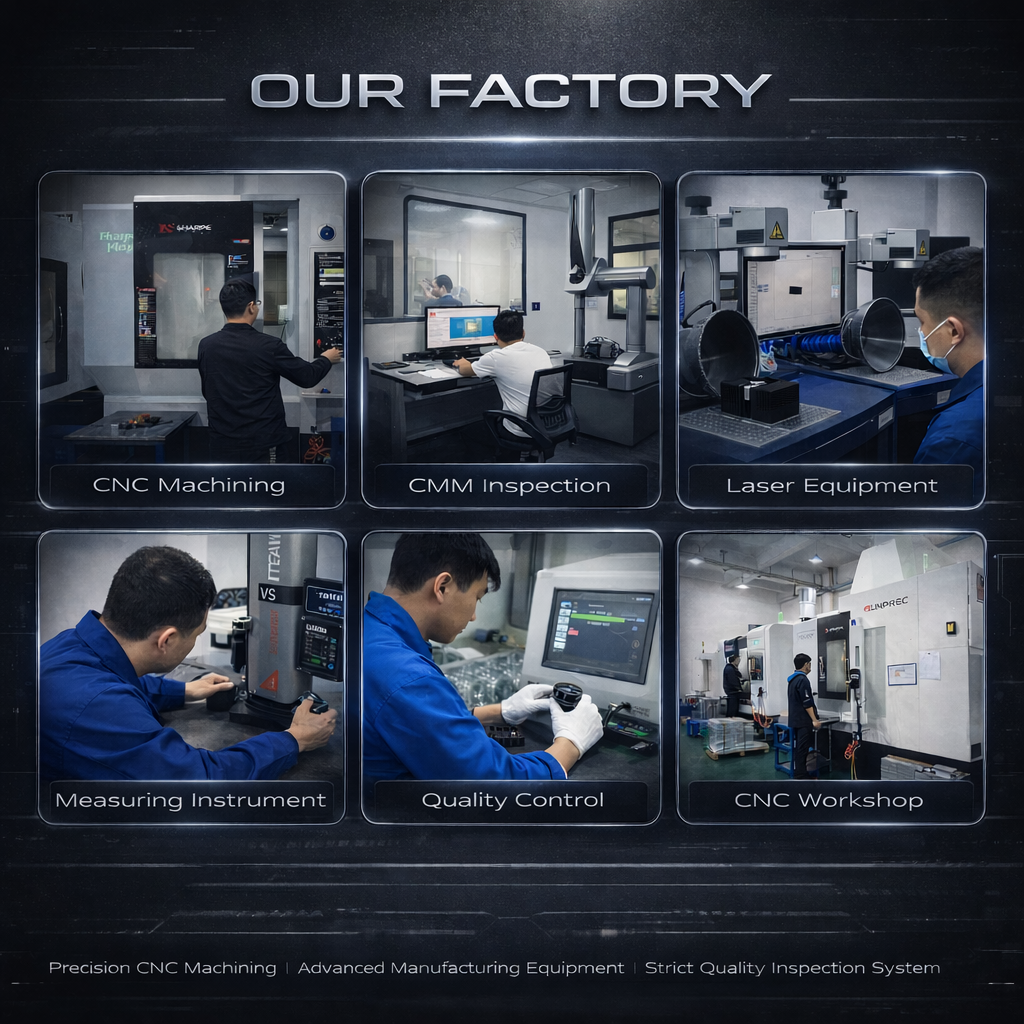
SUNPREC HARDWARE CO., LTD. — die casting and CNC machining scope for aluminum, zinc, and magnesium alloys.
3. Which route is more cost-effective for a thin-wall part?
There is no universal answer, and any supplier who gives one before seeing the drawing is guessing. Cost is driven by the wall itself, the grade, cycle time, whether secondary 3-axis CNC milling is required, and the finishing sequence. Two observations are useful at the budgeting stage. First, zinc die casting is identified as a fast-growing segment partly because of cost-effectiveness in consumer electronics, so it is often the competitive route for thin-wall enclosures. Second, aluminum's 74.78% share of the market reflects volume across automotive and industrial programs, not a lower piece price for any specific part. The reliable method is to send the same drawing for both routes and compare delivered cost including machining and finishing.
4. How is a thin-wall design validated before mass production?
Validation runs from prototype and small-batch trials to mass production, with first-article inspection at the start of every new batch. Critical features are verified on a CMM coordinate-measuring machine where tolerances are tight, and general dimensions are checked with calipers, micrometers, a height gauge, and a surface roughness tester. For thin-wall work, the first article is where the wall, the ±0.01 mm tolerance, and any milled features are confirmed together, because a wall that measures correctly before machining can still move if too much material is removed afterwards. A minimum order quantity of 10 units makes a trial run practical before a larger commitment.
5. What lead time should be planned, and how do I start a sample or quotation request?
SUNPREC quotes a lead time of 21–30 days, with die casting cycle times of 15–90 seconds per piece and monthly capacity of 4,200,000 units, so schedule risk usually sits in tooling and finishing rather than in casting hours. To get an accurate quotation, send the 2D drawing and 3D model with the wall callout, the grade (Zamak3/Zamak5 or ADC12/A380), the tolerance requirement, the secondary machining features, and the finishing specification. Sample and quotation requests can be sent to service@sunprec.com or by phone at +86-769-21686613; the company's capability presentation is available as a downloadable brochure, and the full capability overview is published at www.sunprec.com.
Conclusion: Choose the Wall First, Then the Alloy
The zinc-versus-aluminum question is usually answered by four numbers before any commercial discussion begins. A 0.4 mm minimum wall with a 1.3–1.5 safety factor and a 40–80 MPa tensile band describes hot-chamber zinc in Zamak3 or Zamak5. A 0.8 mm minimum wall with a 1.2 safety factor and an 80–120 MPa tensile band describes cold-chamber aluminum in ADC12 or A380.
If the governing constraint is a wall thinner than 0.8 mm, the zinc route is the direct fit, and secondary 3-axis CNC milling plus a defined finish will complete the part. If the governing constraint is load, heat, or mass, aluminum's thicker minimum wall is the reason the part exists at all. Getting the order right — wall, then safety factor, then grade, then machining and finishing — is what keeps a thin-wall project from being re-quoted after tooling.

Next step: send your drawing, grade, and finishing specification for a die casting sample or quotation — service@sunprec.com.
Have Questions or Need More Details?
Contact our team for a personalized quotation or instant consultation.
Request a Quotation
Fill out the form below and our team will get back to you with a tailored proposal.
WhatsApp Direct Chat
Prefer to chat in real-time? Message us on WhatsApp for instant assistance & quick answers.
- Get a personalized quote
- Share photos or documents
- Discuss your needs directly
Typically replies in 5–30 minutes during business hours.