
Die Casting Parts for Robotics and Automation: Motor Housings, Heat Sinks, and Enclosures
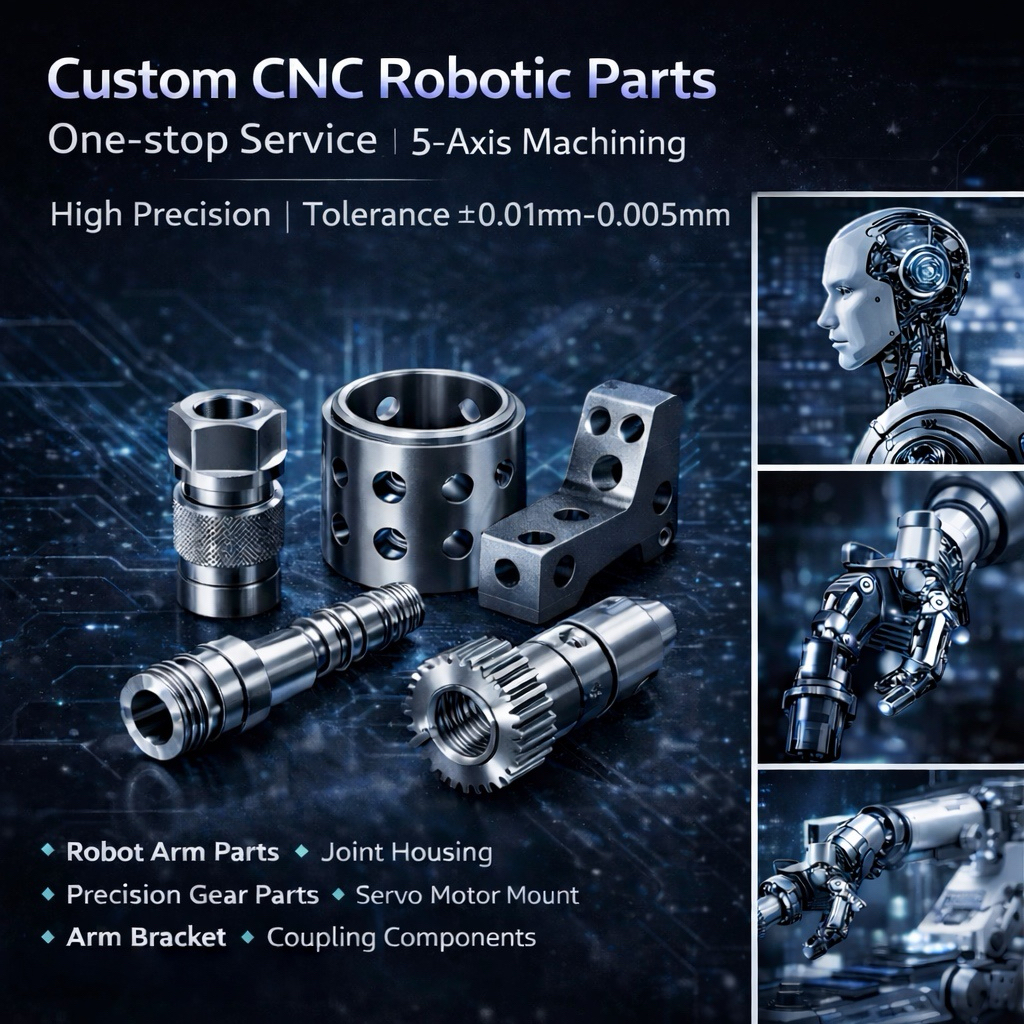
A servo motor, a motion controller, a machine-vision module and a power supply all sit inside metal bodies. Those bodies are usually die casting parts: motor housing die casting parts, heat sink die casting parts and equipment housing die casting parts. They decide whether a bearing bore stays aligned, whether heat leaves the electronics, and whether vibration reaches the encoder. For a robotics or automation buyer, the real question is not whether to use die casting at all — it is which alloy grade, wall thickness and surface finish each functional part needs.
Why Robot Buyers Need Application Logic, Not a Process Definition
Most die casting resources start with the process: molten metal is forced into a steel die under pressure. That is accurate, and it is also close to useless when you are specifying a housing for a six-axis arm.
An automation engineering team typically has to settle four separate questions before it can lock a supplier:
- Can the motor housing hold concentricity under load? This is a rigidity and integrated-forming question, not a casting-pressure question.
- Can the heat sink move enough heat out of a dense electronics layout? This depends on alloy choice and on how thin the fins and walls can be cast.
- How thin can the enclosure wall go before fill becomes unreliable? The practical limits differ sharply between zinc and aluminium.
- Will the surface finish interfere with assembly, conductivity or corrosion resistance? Anodizing, powder coating and electroplating each solve a different problem.
None of those questions can be answered from a process diagram. They need to be matched to a specific part function, and that is what the rest of this guide does.
Industry Background: Where Die Casting Volume Is Actually Going
The category is not small. The global die casting market was valued at USD 93.56 billion in 2025, according to Fortune Business Insights. Within that total, aluminium die casting commanded a 74.78% share of the global die casting market by raw material in 2025, based on Mordor Intelligence data. The transportation segment alone accounted for more than 64.0% of aluminium die casting revenue in 2025, per Grand View Research.
Robotics and automation sit alongside those volumes rather than in a separate world. Equipment housings, motor housings and electronic enclosures for automated machinery draw on the same tooling, alloy and finishing supply base that serves automotive and industrial equipment programmes.
Two structural signals matter for anyone planning a 2026–2027 automation build:
- Lightweight alloys are still expanding. The global magnesium casting market was valued at USD 1.42 billion in 2026 and is projected to reach USD 2.96 billion by 2035, a CAGR of 8.9%, according to Business Research Insights.
- Zinc is being re-evaluated for electronics. Market Research Future notes that zinc die casting is a fast-growing segment driven by cost-effectiveness and EMI shielding properties for consumer electronics — a property set that also matters for communication device housing components.
On the supply side, large-format casting is reshaping cost expectations. Tesla’s deployment of 9,000-ton presses for rear underbody assemblies reduced manufacturing costs by 40%, according to Market Research Future. That is an automotive example, but it explains why automation buyers increasingly ask suppliers about machine tonnage and integrated forming rather than about casting alone.
Compliance expectations are also tightening. IATF 16949:2016 is the mandatory quality management system standard for die casting suppliers serving the automotive industry, as documented by Bian Diecast. Robotics and automation programmes are not automatically bound by it, but many tier-1 automation integrators now use it as a default supplier filter.
Detailed Solution: The Three Part Families That Carry a Robot Build
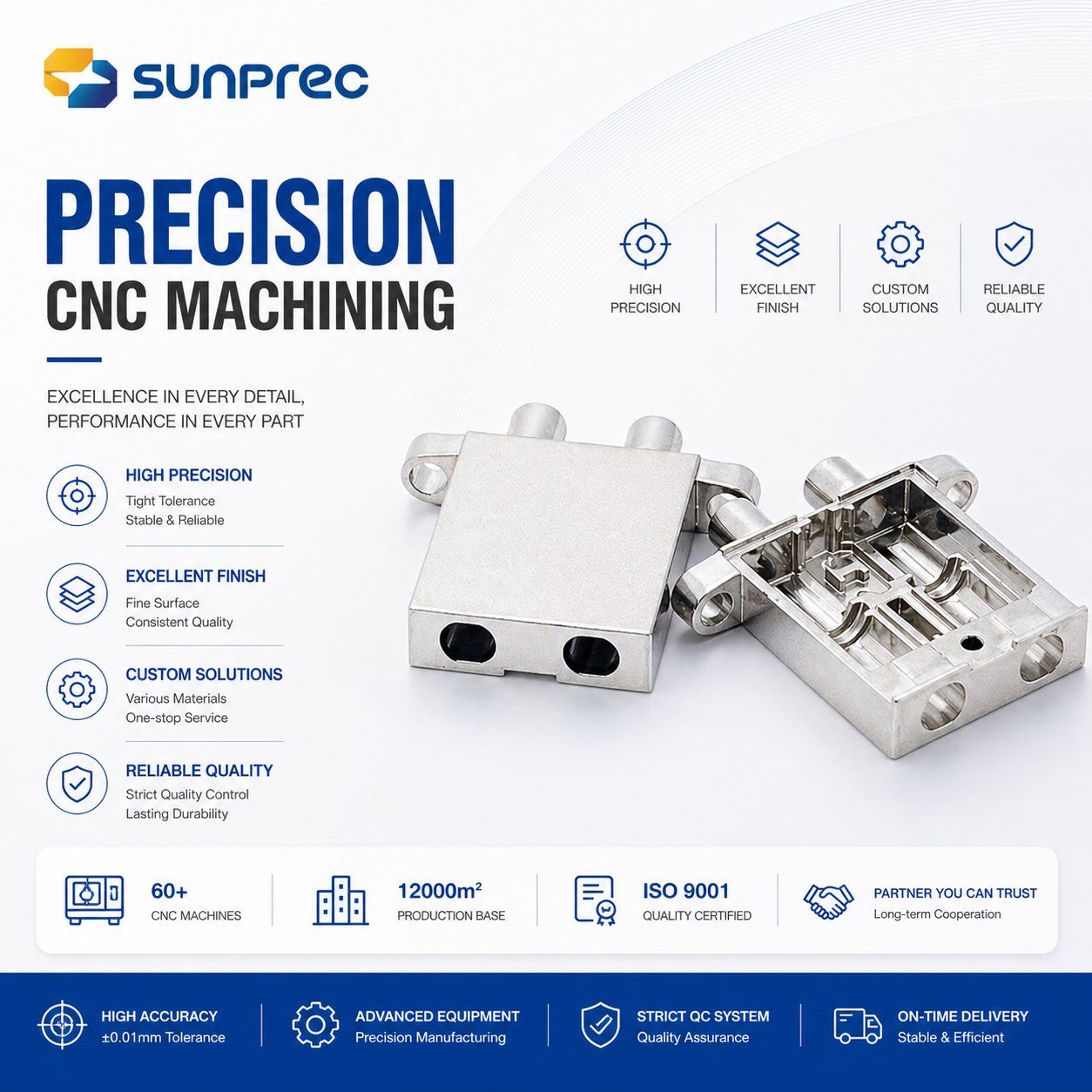
Die casting parts for robotics and automation are not one product. They divide into functional families, and each family should be specified differently.
1. Motor Housing Die Casting Parts
A motor housing die casting part is the structural shell that holds stator, rotor and bearing seats in a fixed relationship. Its job is geometric stability, and the decisive production fact is forming method. One-step integrated forming is suitable for complex thin-wall parts and provides higher overall rigidity without splicing gaps. Where a welded or bolted assembly would introduce joints that can shift under torque, a single cast body keeps the bore geometry continuous.
Because cast surfaces alone rarely satisfy a bearing fit, the housing is normally completed with secondary machining. The die casting process is compatible with secondary 3-axis CNC milling for precise holes, grooves and fitting surfaces — the operations that create the register diameters and mounting patterns a motor actually bolts to.
2. Heat Sink Die Casting Parts
A heat sink die casting part is a thermal component that doubles as a structural element. Aluminium alloy die castings provide heat dissipation and lightweight properties, which is why the alloy family dominates this role. Two production characteristics decide whether a cast heat sink is viable at all: how thin the fins can be cast, and how repeatable the geometry is at volume.
Thin-wall capability sets the ceiling on fin density. This product supports thin-wall die casting with a minimum wall thickness of 0.4 mm for zinc and 0.8 mm for aluminium. In practice, aluminium heat sinks in automation equipment usually work from the 0.8 mm figure, which allows reasonably dense fin arrays while keeping the housing stiff enough to act as a mounting surface.
3. Equipment Housing Die Casting Parts
An equipment housing die casting part is the external body of a controller, drive cabinet module, robot joint cover or power unit. It is judged on rigidity, wall consistency and the ability to accept features without secondary assembly. The one-step integrated forming route provides higher overall rigidity without splicing gaps and suits complex thin-wall parts, which is the profile most automation enclosures fall into.
Two adjacent applications share the same production logic:
- Electronic enclosure components — the product can be used for electronic enclosure components, alongside heat sink components and equipment housing components.
- Communication device housing components — the same die casting capability covers communication device housing components, an application where zinc’s EMI shielding behaviour is a recognised driver of segment growth.
Both fall under industrial equipment, electronics and communication equipment sectors, which sit alongside the aerospace, automotive, semiconductor, medical, new energy, rail traffic, robotics and automation, and instrumentation industries that this capability is intended for.
Material Selection: ADC12, A380, Zamak3 and Zamak5
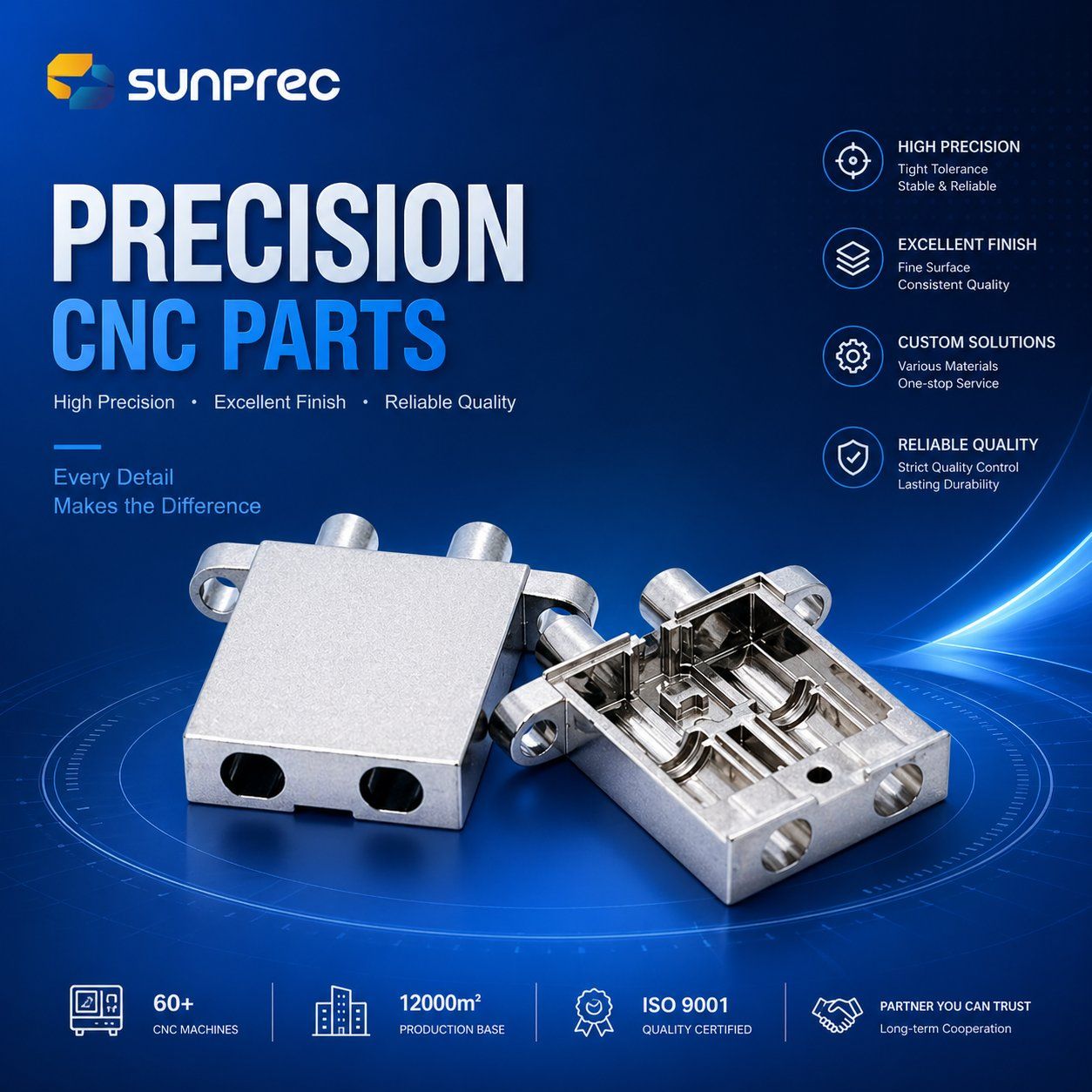
The material grades used in this product are ADC12, A380, Zamak3 and Zamak5. ADC12 and A380 are aluminium alloy grades; Zamak3 and Zamak5 are zinc alloy grades. Choosing between them is a function of wall thickness, strength, heat path and vibration behaviour, not brand preference.
Aluminium: ADC12 and A380
Aluminium alloy die castings have a tensile strength of 80–120 MPa. The safety factor applied to cold-chamber aluminium alloy is 1.2. The alloy family also carries the thermal and mass advantages that matter in a robot: aluminium alloy die castings provide heat dissipation and lightweight properties, and they support colourful anodizing, powder coating and painting.
Where an automation programme needs a lightweight equipment housing that also acts as a heat path, ADC12 or A380 is the natural starting point. The trade-off is wall thickness: aluminium bottoms out around 0.8 mm in this process.
Zinc: Zamak3 and Zamak5
Zinc alloy die castings have a tensile strength of 40–80 MPa. The safety factor for hot-chamber zinc alloy is 1.3 to 1.5 — a wider band than aluminium, reflecting the greater variability that thinner walls introduce. Zinc allows a minimum wall thickness of 0.4 mm, half the aluminium figure.
That 0.4–0.8 mm gap is the single most useful specification number in this article. If a design needs enclosure walls, small gearbox covers or instrument housings below roughly 0.8 mm, zinc is the only realistic die casting option in this material set.
Vibration Damping: Where Zinc and Magnesium Change the Decision
Zinc and magnesium alloys have good vibration damping for precision instruments and power tools. In robotics and automation, that property is not cosmetic. Vibration-sensitive payloads — encoders, optical sensors, precision stages and instrument housings mounted on moving axes — behave differently when the surrounding structure absorbs energy instead of transmitting it. For an instrument housing die casting part or a motor housing on a high-speed axis, damping can matter more than tensile strength.
Aluminium, by contrast, is selected for a different reason: it moves heat and it saves mass. The practical rule is to choose by dominant failure mode. If the risk is thermal, choose aluminium. If the risk is vibration or wall-thinness, evaluate zinc or magnesium.
Surface Finishes for Robotic and Electronic Enclosures
Available surface finishes include anodizing, powder coating, electroplating, passivation and zinc plating. Each one attaches to a specific requirement rather than to a styling preference.
- Anodizing — aluminium alloy die castings support colourful anodizing. It is the usual choice where an equipment housing needs a durable, non-conductive, coloured outer surface. Clear anodizing and colour anodizing are both available in this finishing set.
- Powder coating — aluminium alloy die castings support powder coating, and it is also listed among available finishes more broadly. It suits larger equipment housing die casting parts and robot covers that will be handled, cleaned or exposed to workshop environments.
- Electroplating — surface plated die casting parts form a recognised product category, and electroplating is one of the available finishes. It is typically applied where a decorative or wear-facing surface is required.
- Passivation and zinc plating — both are listed among available surface finishes and are commonly used for corrosion protection on smaller hardware-facing castings.
One design note matters more than the finish list: finishing should be chosen against the assembly, not after it. A coated housing that must also function as an electrical ground path, or a plated communication device housing that must retain a specific shielding behaviour, needs the finish decision inside the design review rather than after tooling is cut.
Step-by-Step: Specifying Die Casting Parts for an Automation Project
This sequence reflects how a die casting programme moves from drawing to repeat monthly delivery.
- Assign a function to every part. Label each item as a motor housing, a heat sink, an equipment housing, an electronic enclosure component or a communication device housing component. The label drives everything downstream.
- Select the alloy grade against the binding constraint. Use ADC12 or A380 when heat dissipation and lightweight construction dominate. Use Zamak3 or Zamak5 when thin walls or vibration damping dominate. Confirm the wall thickness target first, because that decision alone eliminates one family in most cases.
- Lock tolerances and wall limits. Precision die casting parts in this capability hold a dimensional tolerance of ±0.01 mm. Minimum wall thickness is 0.4 mm for zinc and 0.8 mm for aluminium. If a design calls for a 0.6 mm wall in aluminium, it needs redesign before quotation, not after.
- Plan secondary machining up front. The process is compatible with secondary 3-axis CNC milling for precise holes, grooves and fitting surfaces. Bearing seats, connector cut-outs and mounting faces should be identified at drawing stage so they are cast close to net shape and finished by milling.
- Choose the finish against the end use. Anodizing and powder coating for aluminium exteriors; electroplating, passivation or zinc plating where corrosion protection or a wear surface is required.
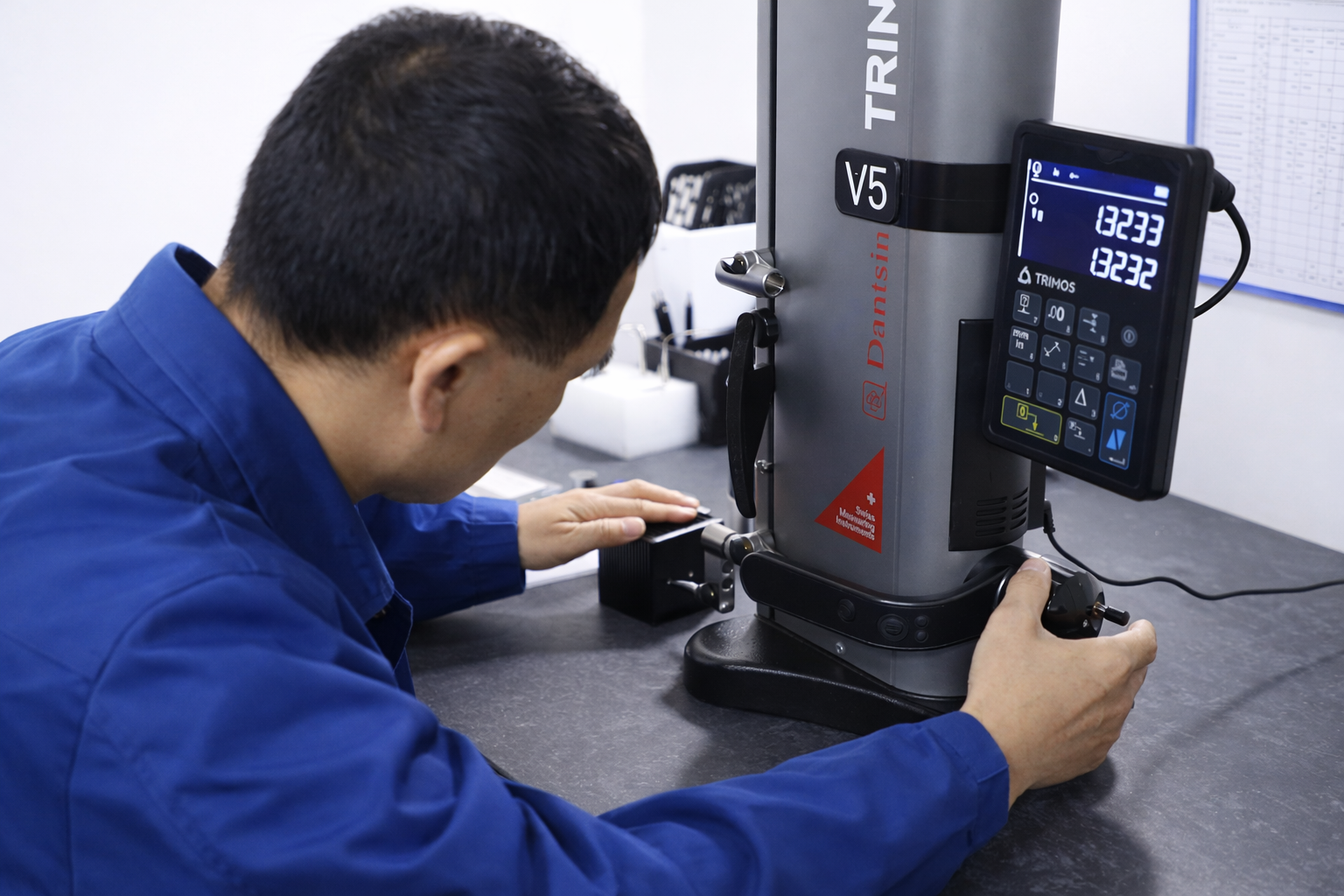
- Validate with real inspection equipment. Parts must be checked with inspection tools including a 2.5D projector and a TRIMOS height gauge. Measurement method should be agreed before the first article, not disputed at first shipment.
- Confirm volume readiness. The production process supports automated mass delivery with a cycle time of 15–90 seconds per piece. That cycle band is what allows a robotics programme to move from prototype validation to repeat monthly orders without re-tooling.
The 0.4 / 0.8 Rule in One Line
If the design needs a structural wall thinner than 0.8 mm, aluminium is out and zinc is in. If the design needs heat dissipation and low mass, aluminium is in and zinc’s damping advantage becomes secondary.
Use Cases in Robotics and Automation
The product can be used for equipment housing components, motor housing components, heat sink components, electronic enclosure components and communication device housing components. Mapped to real automation builds, that produces a fairly specific list:
- Robot joint servo motor housings. Integrated forming keeps the bearing bore rigid; secondary 3-axis CNC milling produces the register diameters and mounting faces.
- Drive and controller equipment housings. Cast as a single body to avoid splicing gaps, then powder coated or anodized for workshop durability.
- Machine-vision and sensor module heat sinks. Aluminium alloy die castings provide heat dissipation while also carrying mounting geometry, removing a separate bracket from the bill of materials.
- Precision instrument housings on moving axes. Zinc or magnesium alloys contribute vibration damping, protecting measurement stability in instrumentation applications.
- Communication device housing components. Zinc die casting’s EMI shielding properties are a recognised driver of segment growth in electronics.
- Electronic enclosure components for automation cabinets. Thin-wall forming keeps weight down while retaining rigidity.
- Power tool and handheld automation equipment bodies. Vibration damping from zinc and magnesium alloys is directly relevant for precision instruments and power tools.
Comparison Table: Aluminium vs Zinc in Robotics Die Casting
The table below uses only specification values confirmed in this capability’s material and process data.
| Specification | Aluminium — ADC12 / A380 | Zinc — Zamak3 / Zamak5 |
|---|---|---|
| Tensile strength | 80–120 MPa | 40–80 MPa |
| Minimum wall thickness | 0.8 mm | 0.4 mm |
| Die casting machine type | Cold chamber | Hot chamber |
| Safety factor | 1.2 | 1.3–1.5 |
| Heat dissipation & lightweight | Provides heat dissipation and lightweight properties | Not specified in this material set |
| Vibration damping | Not specified in this material set | Good vibration damping for precision instruments and power tools |
| Surface finish compatibility | Supports colourful anodizing, powder coating and painting | Electroplating, passivation and zinc plating are available finishes |
| Typical robotics role | Heat sinks, lightweight equipment housings | Thin-wall enclosures, instrument housings, damping structures |
Where Magnesium Fits
Magnesium alloy die casting components form part of the same capability set. In this material list, magnesium is specifically associated with vibration damping for precision instruments and power tools — the same characteristic that makes zinc attractive on vibration-sensitive axes. Magnesium die casting is also the fastest-growing casting segment in the market data reviewed above, so it is worth evaluating early in a design cycle rather than as a late substitution.
Supply Perspective: What a Die Casting Partner Needs to Demonstrate
SUNPREC HARDWARE CO.,LTD is a one-stop metal part manufacturer located in Dongguan City, Guangdong Province, China, providing precision CNC machining, CNC turning, die casting, investment casting, extrusion and surface finishing services. The company was established in 2020 and has over five years of metal manufacturing experience.
For robotics and automation programmes, the relevant operational facts are concrete: the manufacturing facility covers 3,500 square metres of production area, employs approximately 200 staff, and reaches an annual production capacity of 5,000,000 units. The R&D team consists of 10 engineers. The company serves markets in the EU and the USA.
Equipment matters as much as capacity. Production is supported by FANUC CNC machining centres and HEXAGON metrology equipment, with inspection using a 2.5D projector and a TRIMOS height gauge. For buyers evaluating China aluminium alloy die casting parts manufacturers, that combination — integrated forming capability, defined cycle time, and named metrology equipment — is more useful than a general capability statement.
FAQ
1. What should buyers check when screening China aluminium alloy die casting parts manufacturers?
Start with four verifiable items rather than a capability brochure. First, confirm which alloy grades the supplier actually runs — in this case ADC12 and A380 for aluminium, and Zamak3 and Zamak5 for zinc. Second, confirm the minimum wall thickness the process can hold: 0.4 mm for zinc and 0.8 mm for aluminium. Third, confirm the dimensional tolerance on precision die casting parts, which is ±0.01 mm in this capability. Fourth, confirm the inspection method, which should include a 2.5D projector and a TRIMOS height gauge. A supplier that can answer all four with numbers is a supplier whose parts can be checked against a drawing. If a robotics programme also serves an automotive customer, IATF 16949:2016 is the standard tier-1 buyers normally require from die casting suppliers.
2. What tolerance and wall thickness can a robot motor housing die casting part achieve?
Precision die casting parts in this capability hold a dimensional tolerance of ±0.01 mm. Wall thickness depends on the alloy: the minimum is 0.4 mm for zinc alloy die castings and 0.8 mm for aluminium alloy die castings. Motor housings are normally cast with one-step integrated forming, which is suitable for complex thin-wall parts and provides higher overall rigidity without splicing gaps. Bearing bores, connector openings and mounting faces are then produced by secondary 3-axis CNC milling for precise holes, grooves and fitting surfaces.
3. Why choose zinc or magnesium instead of aluminium for precision instrument housings?
The deciding factor is usually vibration, not strength. Zinc and magnesium alloys have good vibration damping for precision instruments and power tools, which protects encoders, optical sensors and measurement stages mounted on moving axes. Zinc also allows a 0.4 mm minimum wall thickness, half the aluminium figure of 0.8 mm, so it becomes the only viable option when a housing design drops below roughly 0.8 mm. Aluminium remains the better choice when the dominant requirement is heat dissipation and lightweight construction, since aluminium alloy die castings provide both.
4. Which surface finishes are available for robotic enclosures, and how do I verify a sample before mass production?
Available finishes include anodizing, powder coating, electroplating, passivation and zinc plating. Aluminium alloy die castings support colourful anodizing, powder coating and painting, while electroplating, passivation and zinc plating are used where corrosion protection or a wear-facing surface is needed. Verification should follow the same path as production: confirm the alloy grade and wall thickness against the drawing, review the finish specification against the assembly requirement, and check the first article with a 2.5D projector and a TRIMOS height gauge. Once validated, the production process supports automated mass delivery with a cycle time of 15–90 seconds per piece, which is what makes repeat monthly ordering practical.
Conclusion
Die casting parts for robotics and automation are a specification problem before they are a manufacturing one. Motor housing die casting parts are chosen for rigidity and integrated forming. Heat sink die casting parts are chosen for heat dissipation and lightweight construction, which points to ADC12 or A380. Equipment housing die casting parts, electronic enclosure components and communication device housing components are chosen for wall control and finish compatibility — and when the wall must go below 0.8 mm, Zamak3 or Zamak5 becomes the practical answer.
The numbers that decide most projects are small and specific: ±0.01 mm tolerance, 0.4 mm zinc walls, 0.8 mm aluminium walls, 15–90 seconds per piece, and vibration damping from zinc and magnesium alloys where precision instruments and power tools are involved. Get those five right at drawing stage, and the rest of the programme — finishing, inspection and repeat delivery — follows a predictable path.
Reviewing a robotics or automation enclosure project?
SUNPREC HARDWARE CO.,LTD produces aluminium, zinc and magnesium die casting parts from Dongguan, China, with integrated forming, ±0.01 mm tolerance control and anodizing, powder coating, electroplating, passivation and zinc plating finishes.
Send your 2D/3D drawings or a sample for a die casting quotation, request a sample for validation, or download the full capability overview: SUNPREC Presentation — June 2026 (PDF).
Website: www.sunprec.com | Email: service@sunprec.com | Tel: +86-769-21686613

Have Questions or Need More Details?
Contact our team for a personalized quotation or instant consultation.
Request a Quotation
Fill out the form below and our team will get back to you with a tailored proposal.
WhatsApp Direct Chat
Prefer to chat in real-time? Message us on WhatsApp for instant assistance & quick answers.
- Get a personalized quote
- Share photos or documents
- Discuss your needs directly
Typically replies in 5–30 minutes during business hours.