
Long-Term Die Casting Partnership FAQ: Purchasing Terms, Acceptance Criteria & Quality Assurance
Long-Term Die Casting Partnership FAQ: Purchasing Terms, Acceptance Criteria & Quality Assurance
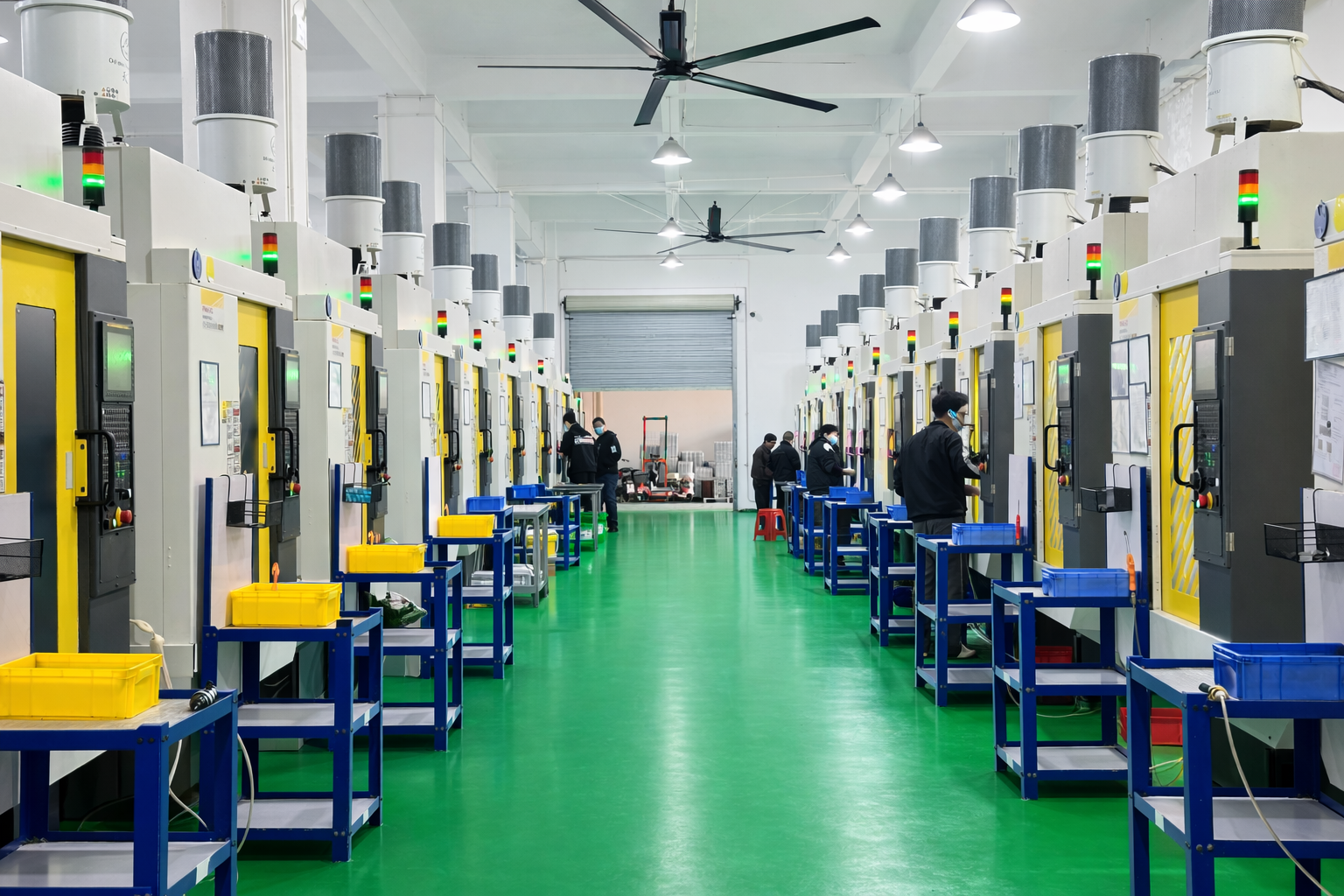
SUNPREC's Dongguan facility runs die casting, CNC machining and surface finishing in one plant — the operating base for repeat die casting supply.
A decision-stage buyer FAQ for engineering and procurement teams moving from a validated die casting sample to repeat volume supply: which purchasing terms to fix in writing, which acceptance criteria make those terms enforceable, and how in-house inspection keeps every repeat batch identical to the first.
Long-term die casting partnerships are usually decided by paperwork rather than by price — the purchasing terms that define what was ordered, the acceptance criteria that define what will be accepted, and the inspection records that prove both were respected on every batch.
The short answer: before volume production starts, three things must be locked in writing. First, the material grade as a grade — ADC12 or A380 for aluminium, Zamak3 or Zamak5 for zinc, or a specified magnesium alloy. Second, the tolerance and datum scheme taken from the customer's 2D drawing or 3D model, with die cast features held to ±0.01 mm where the drawing requires it. Third, the acceptance package that travels with every repeat shipment: FAI report, material certificate, COC and dimensional inspection report.
Cycle time (15–90 seconds depending on part geometry and alloy), secondary 3-axis CNC milling, surface finish, tooling ownership and price validity are all negotiated around those three anchors. When they are left implicit, the relationship is renegotiated every time a defect appears.
SUNPREC CNC Machining, the brand of SUNPREC HARDWARE CO., LTD., is a Dongguan, China–based one-stop metal parts manufacturer established in 2020. The company runs CNC machining, die casting and extrusion in a 3,500 m² facility with around 200 employees, a 10-engineer R&D team and an annual output of 5,000,000 units, exporting roughly 90% of production to the EU and USA.
Why Repeat Die Casting Orders Drift — The Problem in Plain Terms
The first order is protected by attention. The tenth order is protected only by the system. Most long-term die casting failures are not metallurgical; they are administrative, and they appear in five recurring forms.
- Silent material substitution. An aluminium part is quoted as ADC12, then produced from whatever ingot is on the floor. Because the part still fits, nobody notices until hardness, machinability or corrosion behaviour changes a year later.
- Datum mismatch. The drawing defines datum A-B-C; the supplier's fixture references the parting line. Both parties measure correctly and disagree completely.
- Tooling wear without a trigger. Cavities erode gradually, so a batch drifts out of tolerance before anyone notices there was no defined action level.
- Secondary operations split across vendors. Casting, milling, deburring and finishing handed to different suppliers multiplies hand-offs between quality systems. Integrated one-stop services from machining to finishing reduce lead times and quality risks compared to using separate machining vendors.
- Missing records. Six months after shipment, a buyer questions a batch and there is no dimensional inspection report, no material certificate and no traceable inspection record to review.
Those failures map onto four risk categories that any repeat supply agreement has to manage explicitly: quality risk, lead-time risk, compliance and certification risk, and supply chain or raw material fluctuation risk. Each one is controlled by a written term plus a retained record — not by goodwill or by the memory of the engineer who ran the first project.
Industry Background: What a Decision-Stage Buyer Is Choosing Between
Die casting is a mature, high-volume process, and the material mix is heavily skewed. Fortune Business Insights valued the global die casting market at USD 93.56 billion in 2025. Within that market, Mordor Intelligence reports that aluminium die casting held a 74.78% share by raw material in 2025, and Grand View Research records that the transportation segment exceeded 64.0% of aluminium die casting revenue in the same year.
Magnesium is smaller but growing faster. Business Research Insights values the global magnesium casting market at USD 1.42 billion in 2026 and projects USD 2.96 billion by 2035, an 8.9% CAGR. On the zinc side, Market Research Future notes that zinc die casting is a fast-growing segment because of its cost-effectiveness and EMI shielding properties in consumer electronics.
Three practical consequences follow for a buyer structuring a repeat partnership:
- Aluminium capacity is plentiful, process control is not. Because aluminium dominates the market, almost any Asia-based die caster can quote ADC12 or A380. The difference between suppliers on a repeat order is documentation, dimensional control and secondary-operation scope.
- Magnesium capability is a filter. A smaller, faster-growing segment means fewer suppliers hold a stable magnesium process window — so magnesium programs should be qualified on capability evidence, not on price alone.
- Zinc is a functional choice in electronics. Where EMI shielding and cost-effectiveness matter more than weight, zinc grades such as Zamak3 and Zamak5 belong in the specification conversation.
Compliance context matters as much as material context. IATF 16949:2016 is the mandatory quality management system standard for die casting suppliers serving the automotive industry, so automotive buyers should treat it as a gating question rather than a preference.
Purchasing Terms to Align Before the First Volume Order
These are the six terms that decide whether a repeat die casting relationship holds. Each one should appear in the purchase agreement, not only in an email thread.
1. Material grade stated as a grade, not as a family
"Aluminium" is not a specification. ADC12 and A380 are distinct aluminium die casting grades, and Zamak3 and Zamak5 are distinct zinc die casting grades; each behaviour differs in flow, hardness and machining response. The agreement should name the exact grade, the certificate that must accompany it, and the substitution rule — normally that any change requires written buyer approval before the ingot is melted.
2. Tolerance, datum scheme and drawing revision control
Die cast features can be held to ±0.01 mm where the drawing requires it, but only when the datum scheme, the critical dimensions and the inspection method are agreed. The written term should state the drawing revision in force, the datums, the features measured on every batch and the features measured on first article only. A revision-control clause prevents a supplier from producing to last year's drawing after a customer update.
3. Cycle time, tooling and capacity assumptions
Typical die casting cycle times run 15–90 seconds depending on part size, wall thickness and alloy. Cycle time is not trivia: it drives unit price, daily capacity and the lead time the supplier can commit to in peak months. Buyers should also record tooling ownership, tooling location and who pays for cavity maintenance and replacement.
4. Secondary operations inside the same purchase order
Most precision die casting parts are not shipped straight from the casting machine. Secondary 3-axis CNC milling holds critical features, bores and sealing faces that the casting process alone cannot guarantee, and finishing follows — anodizing, hard anodizing, powder coating and sandblasting are the finishing routes most often specified for enclosures and housings. Specifying these operations inside one purchase order keeps the drawing, the datum scheme and the inspection record in one quality system.
5. Commercial terms that decide long-term cost
Unit cost at mass order can be 10%–15% lower than scattered small workshops, but only where the quotation basis is explicit. A precise quote is supported by detailed drawings, because price depends on part complexity, material, processing route and order quantity. The agreement should therefore fix price validity, the raw material fluctuation mechanism, minimum order quantity, packaging standard and the point at which a design change triggers requotation.
6. Change control and traceability obligations
Buyers should require standardized process files and unified inspection record management, with all processing parameters and test data recorded in detail so that production and inspection records remain traceable for every order. This single clause is what makes a quality claim verifiable months after the goods have shipped.
Acceptance Criteria: How 2D/3D Drawings and Samples Drive Manufacturing
Customer drawings and samples are not reference material for a die caster — they are the manufacturing instruction. The way they are issued determines how well the part can be accepted later.
What the 2D drawing carries
The 2D drawing governs acceptance. It should carry the material grade, the datum reference frame, the critical dimensions with tolerances, geometric tolerances where fit matters, the finish callout and the revision number. On thin-wall die casting parts, it also carries the wall thickness limits that determine whether the cavity can fill reliably within the 15–90 second cycle window.
What the 3D model carries
The 3D model governs tooling. It defines parting line options, draft, radii, machining stock and the geometry of ribs and bosses. A model without the drawing is a shape; the drawing is what makes the shape inspectable.
What a physical sample carries
A sample resolves what drawings can only describe: cosmetic surface appearance, texture, edge break and assembly feel. Once approved, the sample should be signed, dated and retained by both parties as the golden reference against which future batches are compared.
What every batch should carry
Acceptance criteria should specify a consistent document package for repeat shipments — typically an FAI report for the first article, plus a material certificate, COC and dimensional inspection report with production batches. When these documents are named in the purchasing terms rather than requested ad hoc, disputes about acceptance become a records check instead of an argument.
How In-House Inspection Keeps Quality Consistent Across Repeat Batches
Consistency is an equipment and records problem, not an intention problem. In-house inspection means the supplier measures with its own metrology hardware rather than relying on a supplier of a supplier.
SUNPREC's quality control activities are regulated under a standardized ISO quality management system framework and run across four stages: IQC, IPQC, FQC and OQC. Incoming material is screened on receipt, quality is monitored continuously during production, and final testing is completed before shipment. The quality lab is equipped with HEXAGON CMM systems, 2.5D optical comparators and TRIMOS high-precision height gauges, supported by micrometers and calipers for routine dimensional checks.
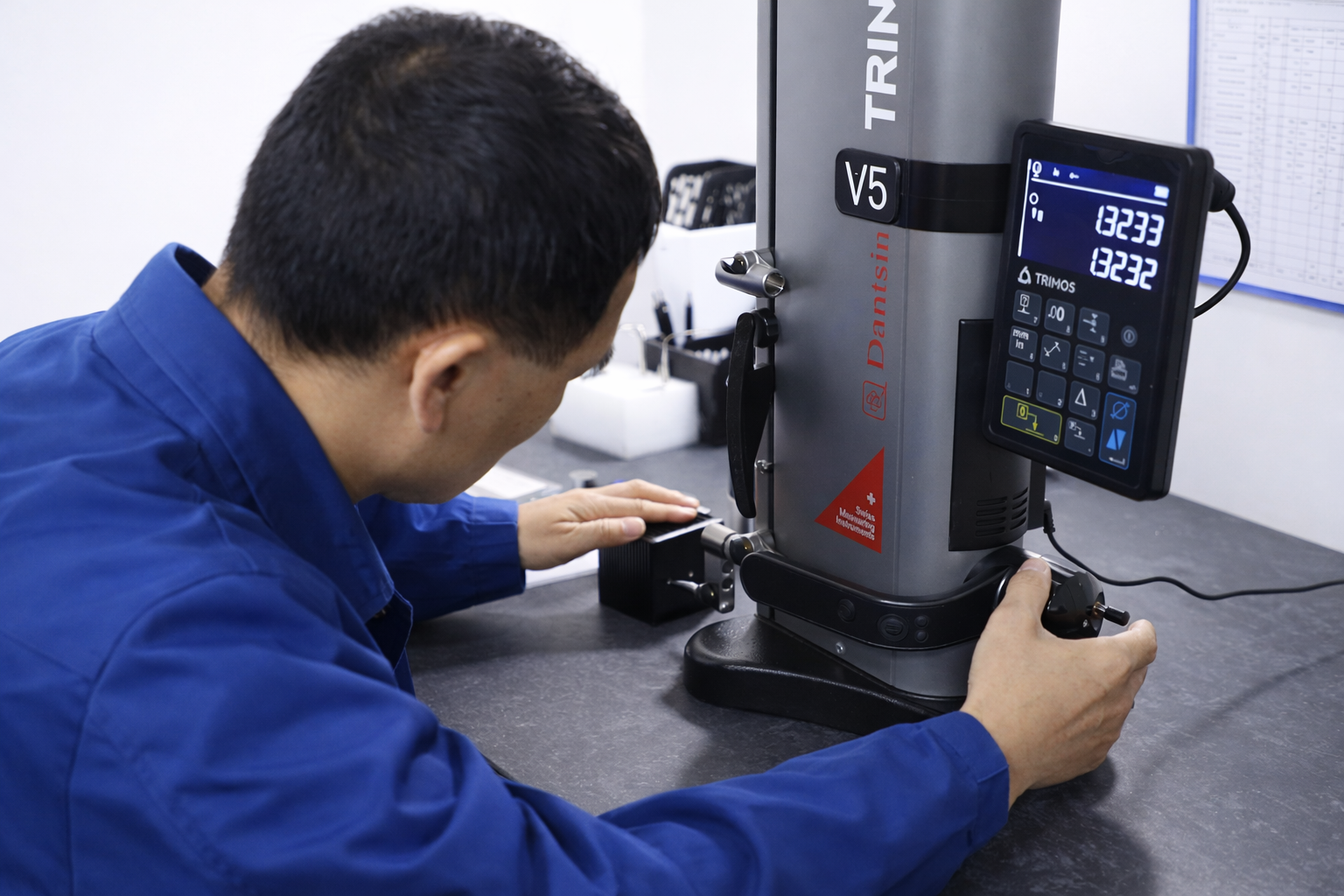
Dimensional verification against the customer drawing happens in-house, so every repeat batch is measured the same way.
Precision hardware extends to production. The majority of the CNC machining centres are FANUC machines with a machine tolerance of 0.005 mm, and high-precision machining hardware is paired with intelligent automated programming that streamlines production flow, raises daily output efficiency and minimizes human-induced dimensional deviations. In practice, that combination is what allows large repeat batches to hold the same dimensional band as the approved sample.
Traceability closes the loop. Complete standardized process files and unified inspection record management protocols record all processing parameters and test data in detail, so the production and inspection history of any order can be reconstructed. For a buyer, this is the operational answer to the four classic supply risks — quality risk, lead-time risk, compliance and certification risk, and supply chain or raw material fluctuation risk.
Certifications and Compliance Evidence for Long-Term Supply
Certificates should be treated as the entry ticket to a repeat partnership, not as a marketing slide. SUNPREC's published compliance evidence includes an ISO 9001 quality management system, AS9100 certification CN059921 and an RoHS 2.0 test report numbered BTL20250603446.
Those three cover different questions. ISO 9001 addresses whether a management system exists and is maintained. AS9100 CN059921 addresses aerospace-grade quality system requirements, which is relevant to buyers in aerospace parts, medical housings and semiconductor equipment components requiring high precision. RoHS 2.0 test report BTL20250603446 addresses restricted substance compliance for electronics-facing die casting programs.
Automotive buyers should add one more check. IATF 16949:2016 is the mandatory quality management system standard for die casting suppliers serving the automotive industry, and it should be confirmed directly with any supplier under evaluation for structural automotive work rather than assumed from a general certificate.
Step-by-Step: How a Repeat Die Casting Order Runs End to End
A stable long-term relationship is a repeatable process, not a repeatable promise. The sequence below is the working model for a die casting program that continues past the first order.
- RFQ with drawings or samples. The buyer issues 2D drawings, 3D models, target annual volume and any finish, tolerance or compliance requirement.
- DFM and quotation. Geometry, parting line, draft and machining stock are reviewed; the quotation is built from part complexity, material, process and order quantity.
- Purchasing terms alignment. Material grade, tolerance and datums, secondary operations, price validity, tooling ownership, MOQ and change control are fixed in writing.
- Tooling and first article. The die is built and a first article is produced to the agreed datum scheme.
- Sample submission. The sample ships with its FAI report, material certificate, COC and dimensional inspection report — typically within a 3–5 day prototype turnaround for prototype-stage parts.
- Acceptance criteria sign-off. The sample is signed as the golden reference, and the per-batch document package is confirmed.
- Volume production. Casting runs at cycle times of 15–90 seconds depending on part and alloy, with IPQC monitoring during the run.
- Secondary operations and finishing. 3-axis CNC milling holds critical features; anodizing, hard anodizing, powder coating or sandblasting is applied as specified.
- Final inspection and documentation. FQC and OQC confirm dimensions and appearance, and the inspection package is compiled before shipment.
- Shipment and archive. Parts ship with records retained, so any future question can be answered from traceable process and test data.
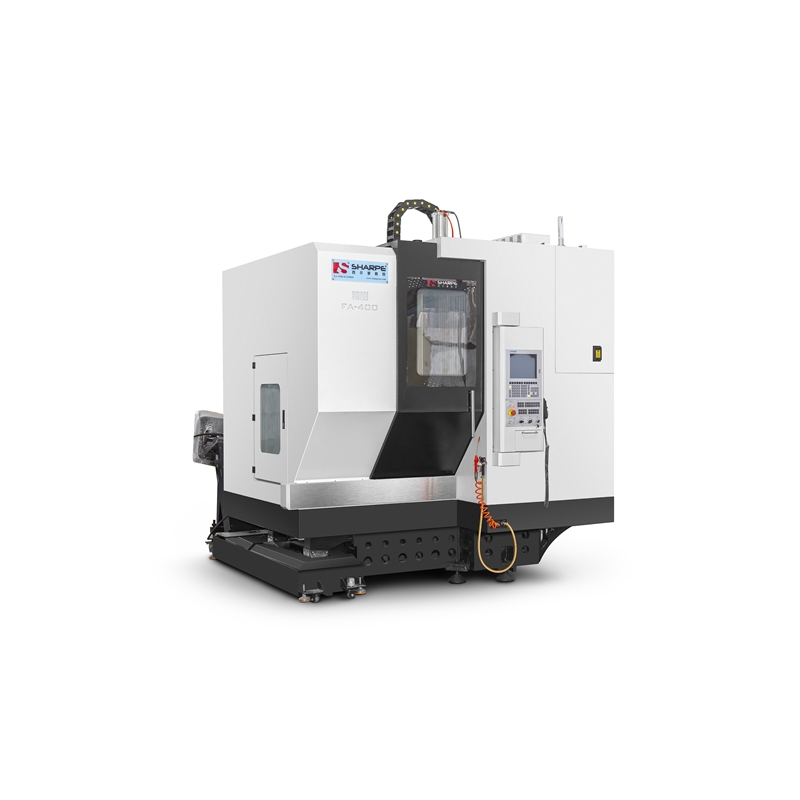
Post-casting CNC machining holds features that the casting process alone cannot guarantee on repeat volume.
Use Cases: Where Long-Term Die Casting Partnerships Pay Off
The value of a stable die casting supply relationship shows up where repeat volume, tight tolerances and finishing requirements overlap.
- Motor housing and automotive die casting parts. Aluminium grades such as ADC12 and A380 dominate here, reflecting the transportation segment's position as the largest application area for aluminium die casting. Repeat programs depend on stable wall sections, controlled porosity and consistent secondary machining of bearing seats and mounting faces.
- Electronic die casting enclosure and heat sink die casting parts. Zinc grades including Zamak3 and Zamak5 are widely used for enclosures and shielding components, where cost-effectiveness and EMI shielding properties drive the material decision. Heat sink geometries need consistent wall thickness and surface finish to keep thermal performance predictable batch to batch.
- Instrument housing die casting parts. Instrument and communication device housings require dimensional stability and repeatable finishes, because an enclosure that varies cosmetically between batches is visible to the end customer.
- Structural, hardware fitting and household appliance die casting parts. These are cost-sensitive, high-volume parts where the 10%–15% unit cost advantage of mass ordering over scattered small workshops is realised only if quality is stable enough to avoid rework and sorting.
- Precision die casting parts for demanding industries. Capability is positioned around aerospace parts, medical housings and semiconductor equipment components requiring high precision, where dimensional control and documentation matter more than unit price.
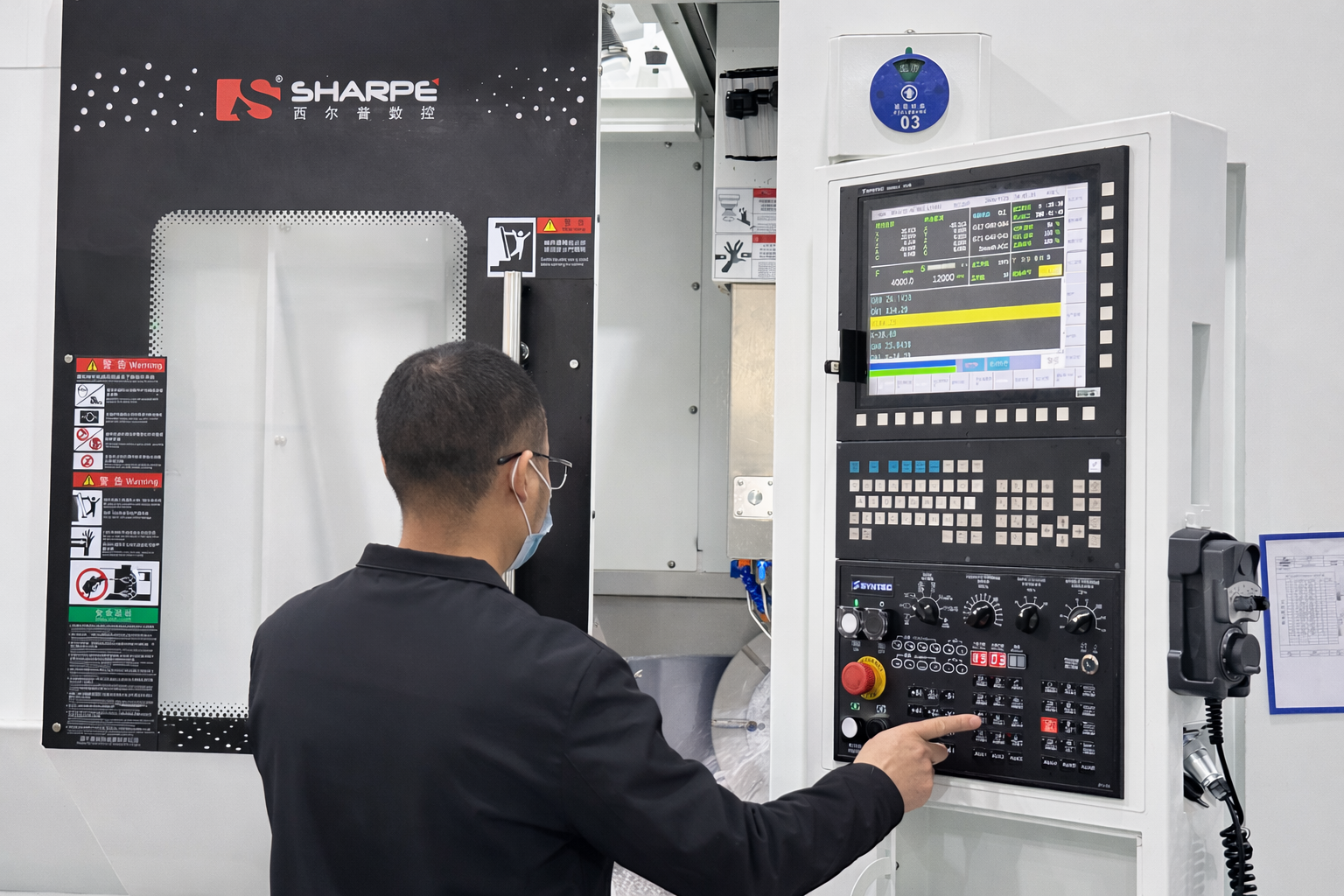
Repeat volume is where purchasing terms and acceptance criteria are tested — not on the first sample.
Comparison Table: SUNPREC CNC Machining vs. General Job Shops vs. Small Machining Factories
The table below compares documented positioning and capabilities. Supplier categories are described as categories rather than as named companies; no verified comparable data is available for the other two categories on certain dimensions, and those cells are marked with an em dash rather than estimated.
| Decision dimension | SUNPREC CNC Machining | General job shops | Small machining factories |
|---|---|---|---|
| Precision and machining scope | Multi-axis CNC machining (3, 4 and 5 axis) with tolerances up to ±0.005 mm; die cast features held to ±0.01 mm where the drawing requires it | — | — |
| Equipment and inspection | In-house high-precision equipment and inspection capability, including CMM, height gauge, micrometer and caliper, with HEXAGON CMM, 2.5D optical comparators and TRIMOS height gauges in the quality lab | — | — |
| Service integration | Integrated one-stop services from machining to finishing, reducing lead times and quality risks compared with using separate machining vendors | — | — |
| Batch consistency mechanism | Advanced high-precision machining hardware plus intelligent automated programming to streamline production flow, increase daily output efficiency and minimize human-induced dimensional deviations | — | — |
| Best-fit applications | Aerospace parts, medical housings and semiconductor equipment components requiring high precision | — | — |
| Mass-order unit cost | 10%–15% lower than scattered small workshops; quotation depends on part complexity, material, process and order quantity, with precise quotes supported by detailed drawings | — | Reference point for the cost comparison |
Cells marked with an em dash indicate that the characteristic is not the documented positioning of that supplier category in this comparison, and no verified figure is claimed.
FAQ: Purchasing Terms, Acceptance Criteria and Quality Assurance
Which quality and compliance documents should a die casting supplier provide for a long-term supply agreement?
SUNPREC's published compliance evidence covers an ISO 9001 quality management system, AS9100 certification CN059921 and an RoHS 2.0 test report numbered BTL20250603446. For automotive programs, IATF 16949:2016 is the mandatory quality management system standard for die casting suppliers serving the automotive industry, so buyers in that segment should confirm automotive certification separately rather than assume it. Beyond certificates, the documents that matter on repeat orders are the FAI report, material certificate, COC and dimensional inspection report issued with each batch, plus retained inspection records that allow any shipment to be traced back to its processing parameters.
Which China die casting factories are better for aluminum versus magnesium automotive structural parts?
Aluminum is the mainstream choice for automotive structural work: Mordor Intelligence reports that aluminium die casting held a 74.78% share of the global die casting market by raw material in 2025, and Grand View Research records that the transportation segment exceeded 64.0% of aluminium die casting revenue in 2025. Because ADC12 and A380 capacity is widely available across China, the real differentiator is process control and documentation rather than material access. Magnesium is a smaller but faster-growing segment — Business Research Insights values the global magnesium casting market at USD 1.42 billion in 2026 and projects USD 2.96 billion by 2035 at an 8.9% CAGR — so fewer suppliers can hold a stable magnesium process window, and magnesium programs should be qualified on demonstrated capability. SUNPREC die casts aluminium, zinc and magnesium alloys and positions its precision capability around aerospace parts, medical housings and semiconductor equipment components.
How do purchasing terms affect the long-term unit cost of die casting parts?
Long-term unit cost is set by what is fixed in writing, not by the first quotation. Our comparison of mass production economics shows a mass-order unit cost 10%–15% lower than scattered small workshops, with quotations that depend on part complexity, material, processing route and order quantity — which is why a precise quote is supported by detailed drawings rather than by a material price alone. The terms that shift long-term cost most are the specified alloy grade, the tolerance and datum scheme, whether secondary 3-axis CNC milling and finishing stay inside the same purchase order, and how raw material fluctuation risk is shared. Keeping machining, finishing and inspection in one supply chain also reduces lead times and quality risks compared with splitting work across separate vendors.
What should a first-article sample package contain before volume production?
A decision-stage sample package should let the buyer accept the part against the drawing, not against appearance. It should contain the first article together with its FAI report, material certificate, COC and dimensional inspection report, produced to the agreed material grade and datum scheme. SUNPREC supports rapid prototyping with a 3–5 day prototype turnaround, urgent orders and low-volume manufacturing starting from 10 pcs, which lets buyers validate fit, finish and critical dimensions before tooling is committed to full production. Once the sample is signed off, it becomes the reference used in the acceptance criteria for every repeat batch.
How is lead time protected on repeat die casting orders?
Lead-time risk is managed as a written term rather than as a promise. Our risk framework covers quality risk, lead-time risk, compliance and certification risk, and supply chain or raw material fluctuation risk, with standardized process files and unified inspection records retaining the processing parameters and test data for every order. Integrated one-stop services from machining to finishing also reduce lead times and quality risks compared with using separate machining vendors, because castings do not sit in a queue between suppliers. Buyers who want to test this on their own parts can request a sample or a quotation — send 2D drawings or 3D models to service@sunprec.com, or download the SUNPREC presentation catalogue for full capability details.
Conclusion
A long-term die casting partnership is built from three documents, not from three promises. The purchasing terms fix what is being bought — grade, tolerance, datums, secondary operations, price basis and change control. The acceptance criteria fix what will be accepted — drawing revision, golden sample, and the FAI report, material certificate, COC and dimensional inspection report issued with each batch. In-house inspection fixes how consistency is proven — IQC, IPQC, FQC and OQC supported by CMM, 2.5D optical comparators and high-precision height gauges, with traceable process and test records behind every order.
Get those three layers right and the technical questions become manageable: ADC12 or A380 for aluminium structural parts, Zamak3 or Zamak5 for zinc enclosures, ±0.01 mm on die cast features where the drawing demands it, 15–90 second cycle times set by geometry, 3-axis CNC milling for critical features, and finishing applied inside the same supply chain. Get them wrong and every repeat order becomes a renegotiation.

Parts ship with their inspection package, so acceptance is a records check rather than a debate.
Next step: validate the terms on your own part
SUNPREC CNC Machining supplies CNC machined and die cast parts from Dongguan, China, with roughly 90% of output exported to the EU and USA. If you are structuring a repeat die casting program, send your 2D drawings or 3D models for a quotation and a sample built to your datum scheme and finish callout.
Email: service@sunprec.com | Tel: +86-769-21686613 | Phone: 181 2861 7970
Address: No.2 Hualing Second Road, Duitang, Chashan Town, Dongguan City, Guangdong Province, China
Website: www.sunprec.com | Blog: blog.sunprec.com
Catalogue: Download the SUNPREC presentation (PDF)
Have Questions or Need More Details?
Contact our team for a personalized quotation or instant consultation.
Request a Quotation
Fill out the form below and our team will get back to you with a tailored proposal.
WhatsApp Direct Chat
Prefer to chat in real-time? Message us on WhatsApp for instant assistance & quick answers.
- Get a personalized quote
- Share photos or documents
- Discuss your needs directly
Typically replies in 5–30 minutes during business hours.