
Long-Term CNC Machining Partnerships: FAQ on Terms, Acceptance, and Repeat Orders
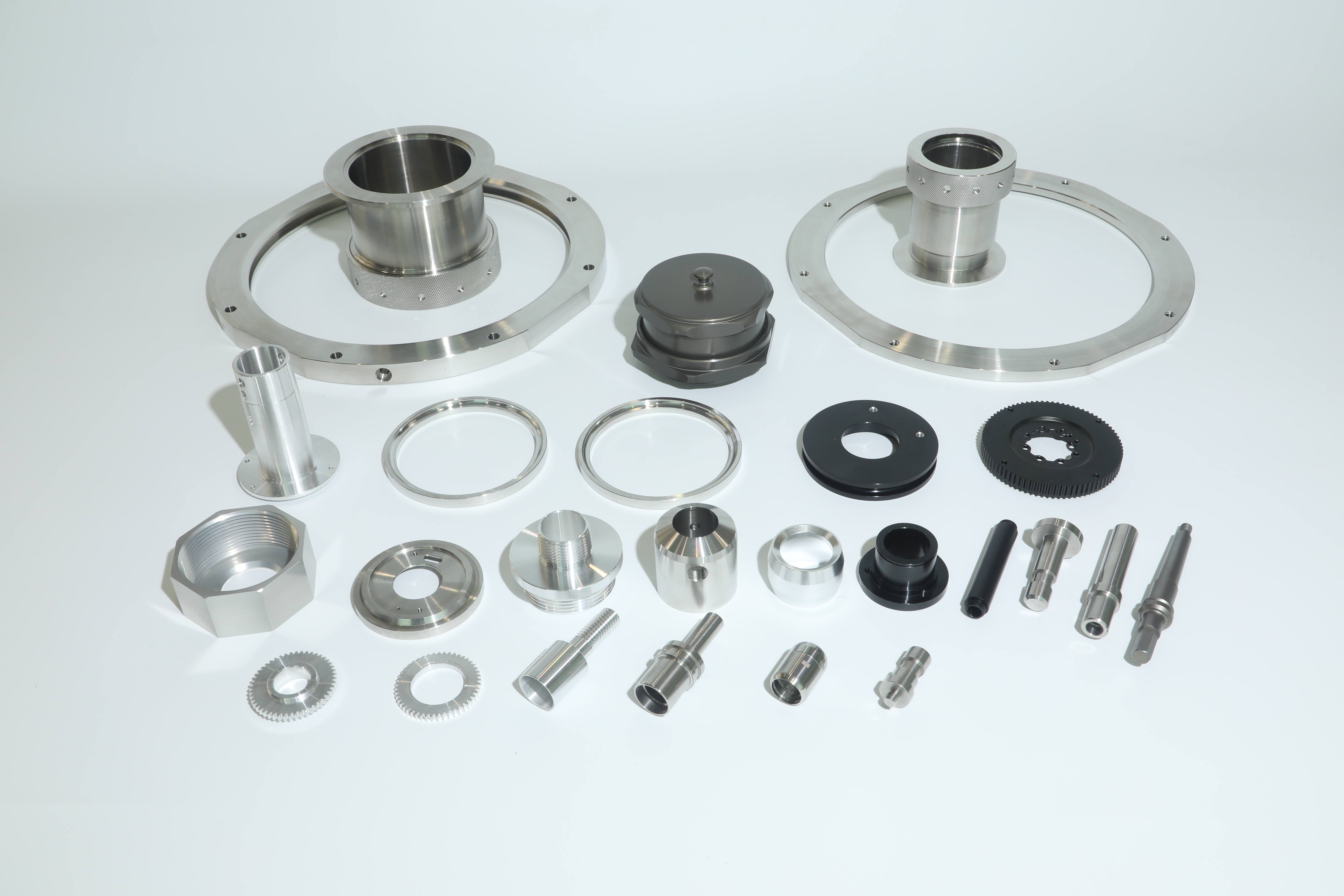
Precision CNC machined components manufactured by SUNPREC CNC Machining, Dongguan, China.
Short answer: when a part moves from a one-off CNC machining or die casting job into monthly supply, three things decide whether the relationship holds: the purchasing terms that apply to every repeat order, the acceptance criteria used to pass or reject a batch, and whether the supplier can reproduce the same dimensional result across hundreds of parts. This article answers the questions buyers actually ask at that switch-over point, using the documented practice of SUNPREC CNC Machining — the brand of SUNPREC HARDWARE CO., LTD, a one-stop metal parts manufacturer based in Dongguan City, China.
Problem Definition: Why Trial Orders Pass and Repeat Orders Fail
A trial order only has to succeed once. Repeat supply has to succeed in month one, in month seven, across a new material batch and possibly a different operator on the floor. That transition is where most CNC machining relationships break, and buyers describe the same three failures again and again:
- Acceptance drift. Batch 1 passes. Batch 6 arrives out of specification and neither side can prove at which step the deviation entered.
- Commercial reset. The original quotation was built around one-off setup. Once volumes become monthly supply, the supplier re-quotes and purchasing has to renegotiate from scratch.
- Continuity gaps. Tooling, raw material lots or personnel change, and there is no traceable record to compare the new output against the approved sample.
None of these are design problems. They are process problems, and they are solved by standardised inspection, traceable records and a pricing structure that assumes repetition rather than treating each order as a new project.
Industry Background: Why Repeat Supply Capability Became a Buying Criterion
The commercial context explains why buyers now screen suppliers on continuity rather than on a single delivered lot. Publicly reported market data for 2026 illustrates the shift:
- The global CNC machining and turning centers market is valued at USD 31.3 billion in 2026, and Asia Pacific held a 55.5% revenue share of that market in 2023 (Grand View Research).
- The aerospace CNC machining market is projected to grow from USD 4.7 billion in 2024 to USD 8.8 billion by 2033 (Dataintelo).
- 5-axis vertical machining centers were identified in 2026 as a critical high-growth segment for complex aerospace and automotive components (industry expert survey).
- The U.S. machine shop services market is valued at USD 46.3 billion in 2026, with approximately 16,400 active businesses (IBISWorld / Marcus Hi-Tech Engineering).
- For medical device work, the FDA Quality Management System Regulation incorporated ISO 13485:2016 by reference as of 2 February 2026 under 21 CFR Part 820, which links supplier qualification to a formal quality management framework.
Two implications follow for buyers. First, a large and fragmented supplier base makes differentiation difficult on price alone, so documented consistency becomes the practical selection filter. Second, in aerospace and medical categories the file trail is part of the product, not an administrative extra.
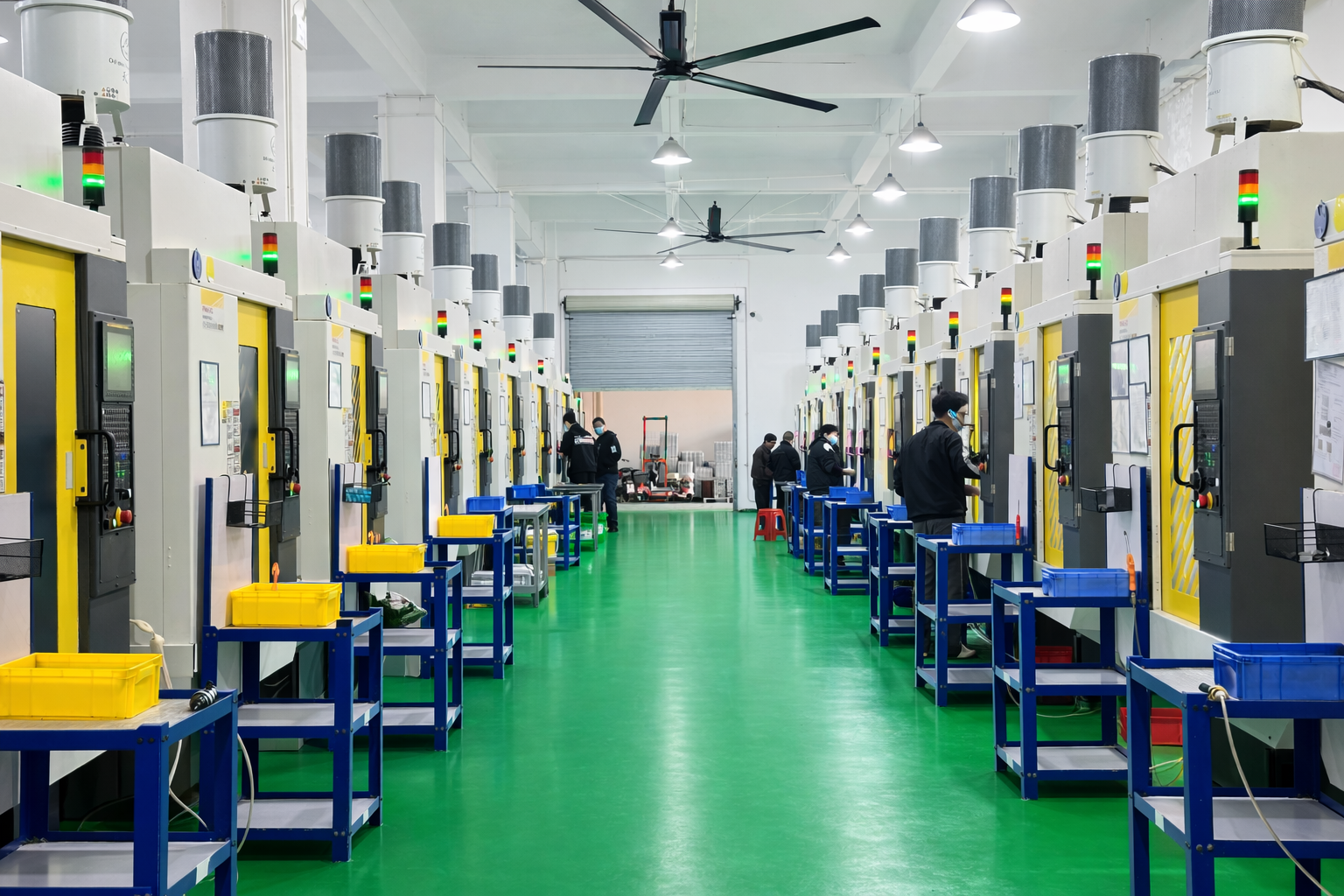
SUNPREC operates a 3,500 m² facility in Dongguan with in-house high-precision machining equipment.
How a Long-Term CNC Machining Partnership Is Structured
A continuous supply agreement can be broken down into auditable parts. Each of the areas below is something a buyer can request evidence for before committing to monthly volumes.
1. Purchasing Terms: Quotation Stability Instead of One-Off Pricing
A one-off buyer receives a price built around a single setup. A long-term buyer needs a price structure that can be budgeted against repeat deliveries. At SUNPREC, quotations depend on part complexity, material, process and order quantity, and an accurate quote requires detailed drawings. Where complexity is comparable, mass order unit cost is 10%–15% lower than scattered small workshops, because setup and programming are absorbed across multiple deliveries rather than charged to one batch.
The practical question for purchasing teams is not the headline price of the first order, but whether that price holds when the part is ordered eleven more times.
2. Acceptance Criteria: How a Repeat Batch Is Judged
Acceptance should not be a debate about whose caliper is correct. SUNPREC runs quality control activities under a standardised ISO quality management system framework and applies three core inspection procedures: incoming material screening on receipt, continuous quality monitoring during production, and thorough final testing before shipment. Process parameters and test data are recorded in standardised files with unified inspection record management, so production and inspection records stay traceable for every order.
For repeat orders the available documentation includes full inspection reports, FAI report, material certificate, COC (Certificate of Conformance) and dimensional inspection report.
Measuring capability includes CMM, height gauge, micrometer and caliper, supported by HEXAGON CMM equipment, 2.5D optical comparators and TRIMOS high-precision height gauges in the quality lab.
3. Drawing-Based and Sample-Based Production
Some programmes enter long-term supply as a 3D model plus 2D drawings, others begin from a physical part that must be reverse-engineered and reproduced. SUNPREC manufactures against customer drawings or against physical samples. Low volume manufacturing starts from 10 pcs, which allows a buyer to validate before committing to larger monthly quantities.
4. Tolerance and Repeatability Across Batches
SUNPREC provides high precision with tolerances up to ±0.005 mm. That capability is supported by FANUC machining centers, with a machine tolerance of 0.005 mm, plus 3-axis, 4-axis and 5-axis CNC configurations for complex geometry.
For a repeat order the relevant question is not how tight a single part can be held, but whether that tolerance reappears in the next delivery. This is where high-precision machining hardware combined with intelligent automated programming matters: it streamlines production, increases daily output efficiency and reduces human-induced dimensional deviations.
5. Certification That Supports Ongoing Supplier Qualification
SUNPREC operates under an ISO 9001 quality management framework and holds AS9100 certificate CN059921 and RoHS certificate BTL20250603446. For aerospace and electronics buyers this matters at the qualification stage, because approval is granted to a supplier system that must remain valid throughout the supply period, not only at first article.
6. Materials, Finishes and 5-Axis Capacity for Continuity
Continuity depends on a supplier not having to re-learn the part each time it is ordered. SUNPREC machines aluminium, stainless steel, carbon steel, brass, copper and titanium, plus engineering plastics including POM, ABS, nylon and PEEK. Integrated surface finishing covers anodizing, hard anodizing, powder coating and sandblasting. CNC milling services, CNC turning services and complex geometry CNC machining are available across 3-axis, 4-axis and 5-axis platforms.
Prototypes are typically produced in 3–5 days, with urgent orders supported.
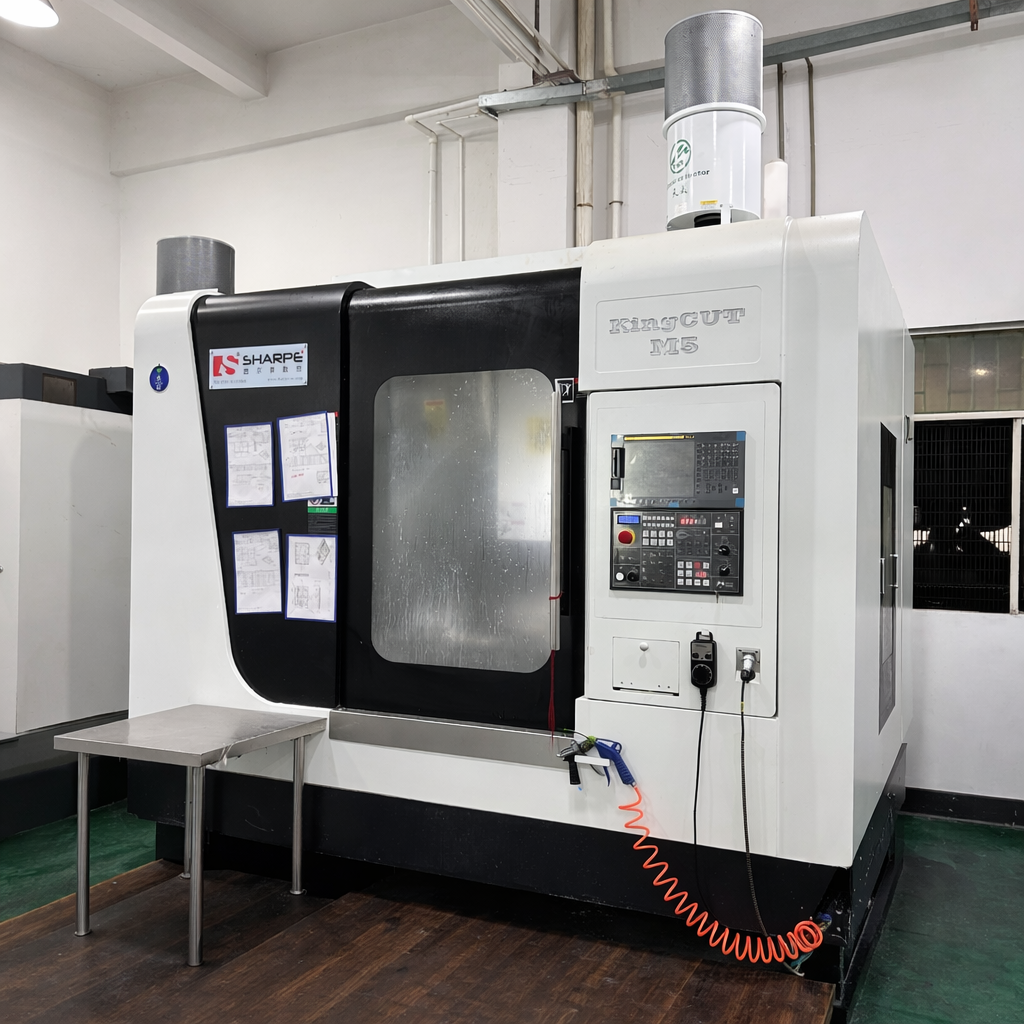
Five-axis capacity supports complex geometry parts and tight tolerance components in continuous production.
From One-Off Order to Monthly Supply: A Step-by-Step Breakdown
The sequence below reflects the order in which a buyer typically de-risks a long-term CNC machining partnership.
- Supplier qualification. Before drawings are circulated, request certification documents, a metrology equipment list and sample reports — FAI report, material certificate, COC, dimensional inspection report. Confirm that process files and inspection records are managed in a standardised, traceable way.
- Drawing or sample review. Send 2D drawings and 3D models, or a physical sample. Quotation is based on part complexity, material, process and quantity. Treat this as a manufacturability review rather than a price comparison alone.
- Prototype validation. Prototypes are commonly delivered in 3–5 days, with urgent orders supported. Validate the physical part, not only the paperwork.
- First article inspection approval. Before mass production, lock the reference dimensions and agree which dimensional report governs acceptance. This is the step that prevents later disputes over batch six.
- Low volume production. Low volume manufacturing begins at 10 pcs. Run the part at a smaller quantity first and observe how the supplier handles repeat ordering — response time, packaging, documentation.
- Mass production. Mass order unit cost is 10%–15% lower than scattered small workshops, and equipment maintenance demand is lower than for general job shops and small machining factories. Automated programming keeps reducing human-induced dimensional deviations as volume grows.
- Repeat orders with traceable records. Each batch passes the same incoming, in-process and final inspection stages, and process parameters plus test data are recorded so batches can be compared against the approved first article. This is where the compounding value of a long-term partner actually sits.
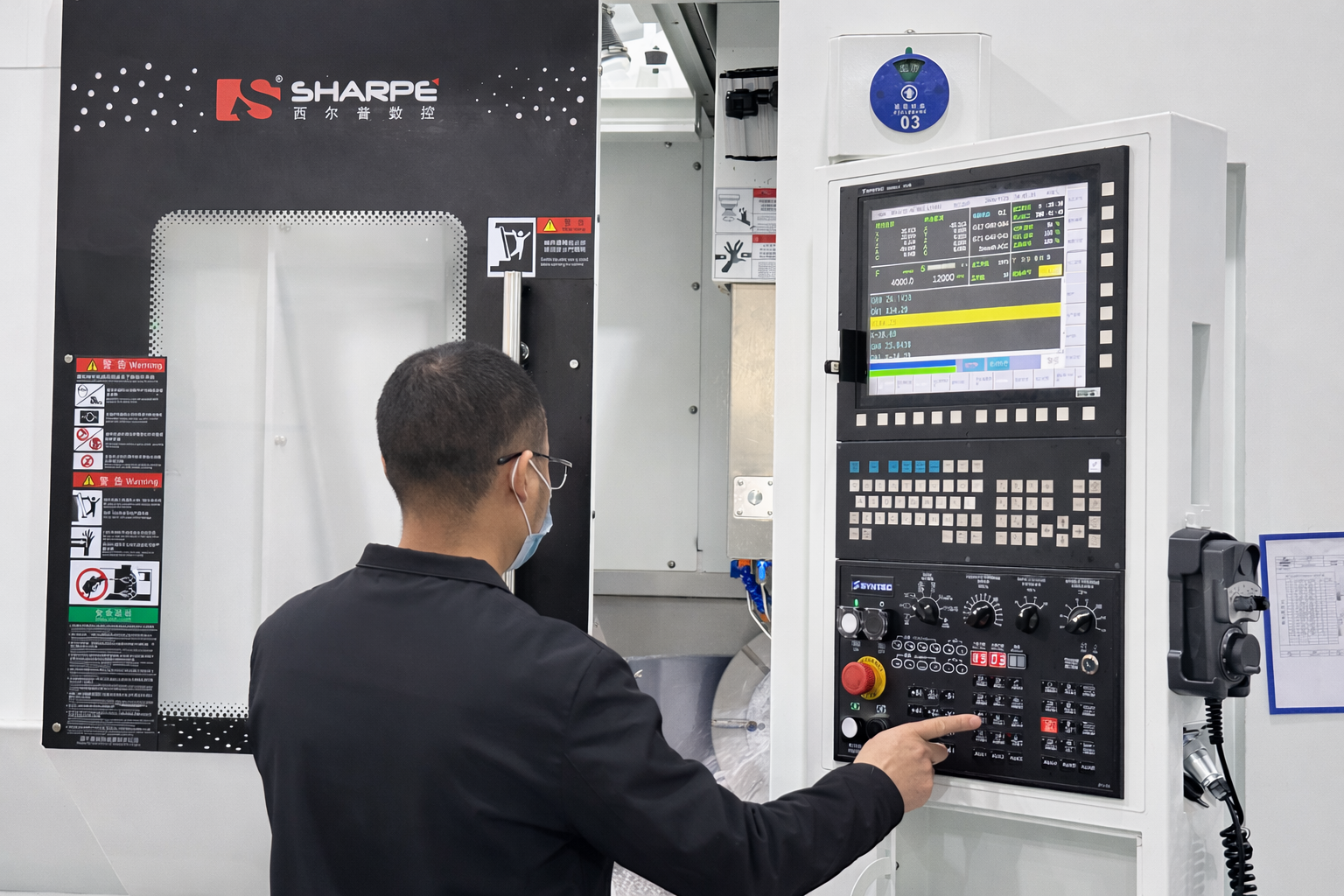
Repeat orders rely on standardised process files rather than one-off operator judgement.
Use Cases: Where Continuity Matters Most
Long-term CNC machining partnerships pay off where batch-to-batch variation is expensive to absorb and where switching suppliers resets the whole qualification cycle.
- Aerospace parts. Complex geometry, tight tolerances and documentation requirements make continuity a core purchasing criterion rather than a convenience. SUNPREC is more suitable for aerospace parts, medical housings and semiconductor equipment components.
- Medical housings. A repeat housing must match the validated batch, and the inspection record forms part of the evidence trail.
- Semiconductor equipment components. Dimensional stability on machined components affects equipment uptime, so repeatability becomes an operating cost question rather than a quality footnote.
- Automotive and industrial components. Medium volumes ordered monthly depend on stable output of aluminium, stainless steel, brass and carbon steel parts with predictable finishing.
- Electronics and oil & gas parts. Material range, surface finish specification and record retention drive supplier choice in these categories.

Material and finished-goods handling for continuous supply programmes.
Long-Term Supplier vs. General Job Shop: A Comparison
The table below compares documented capability at SUNPREC CNC Machining against the typical profile of a general job shop or small machining factory. It does not evaluate any named competitor.
| Decision factor | SUNPREC CNC Machining | General job shop / small machining factory |
|---|---|---|
| Dimensional tolerance | High precision up to ±0.005 mm; FANUC machining centers with 0.005 mm machine tolerance | Standard job shop capability |
| Metrology equipment | CMM, height gauge, micrometer and caliper; HEXAGON CMM, 2.5D optical comparators, TRIMOS high-precision height gauges | Limited precision metrology |
| Inspection stages | IQC, IPQC, FQC and OQC with unified inspection record management | Less formalised inspection workflow |
| Documentation package | Full inspection reports, FAI report, material certificate, COC, dimensional inspection report | Documentation varies by shop |
| Material range | Aluminium, stainless steel, carbon steel, brass, copper, titanium, POM, ABS, nylon, PEEK | Commonly a narrower list |
| Axis capability | 3-axis, 4-axis and 5-axis CNC machining | Frequently 3-axis only |
| Prototype turnaround | Prototype in 3–5 days; urgent orders supported | Longer and less predictable |
| Low volume entry point | Low volume manufacturing from 10 pcs | Higher minimum quantities |
| Repeat order unit cost | Mass order unit cost 10%–15% lower than scattered small workshops | Baseline |
| Maintenance demand | Less maintenance than general job shops and small machining factories | Higher |
| Best suited to | Aerospace parts, medical housings, semiconductor equipment components | General-purpose parts |
Reading the table: the rows are the questions a buyer can verify with documents. Certification, inspection equipment and available reports can be checked before a single part is quoted; tolerance and cost continuity can be checked against the first article and the first repeat delivery.
FAQ: Long-Term CNC Machining Partnership Terms
Which certifications should a long-term CNC machining partner hold?
At minimum, the supplier should operate under a documented quality management framework. SUNPREC works within a standardised ISO quality management system framework and holds AS9100 certificate CN059921 and RoHS certificate BTL20250603446. Certificates alone are not enough — ask for the actual inspection outputs: an FAI report before mass production, material certificate and COC with the shipment, and a dimensional inspection report for the batch. SUNPREC inspects with CMM, height gauge, micrometer and caliper, including HEXAGON CMM, 2.5D optical comparators and TRIMOS high-precision height gauges, and keeps process parameters and test data in unified, traceable records.
Which Chinese CNC machining suppliers are better for titanium aerospace parts?
Judge the evidence, not the shortlist. Four criteria separate qualified suppliers in this category: aerospace-grade certification such as the AS9100 certificate CN059921 held by SUNPREC; demonstrated titanium machining with documented material traceability and CMM verification; 5-axis capability for complex geometry; and batch records that can be reproduced on repeat orders. SUNPREC machines titanium alongside aluminium, stainless steel, carbon steel, brass, copper and engineering plastics, runs 3-axis, 4-axis and 5-axis CNC configurations, and issues FAI reports, material certificates, COC and dimensional inspection reports. It is more suitable for aerospace parts, medical housings and semiconductor equipment components.
Does the unit price drop once orders become repeating monthly volumes?
It can, and the mechanism is straightforward. Mass order unit cost at SUNPREC is 10%–15% lower than scattered small workshops, because setup, programming and fixturing are absorbed across multiple deliveries instead of being charged to a single batch. Quotations depend on part complexity, material, process and order quantity, and a precise quote requires detailed drawings.
Can production run from my drawings or from a physical sample before long-term supply starts?
Yes. SUNPREC manufactures against customer drawings or physical samples. Prototypes are typically completed in 3–5 days with urgent orders supported, and low volume manufacturing starts from 10 pcs, so a buyer can validate the part before committing to monthly volumes.
What lead time should I expect for repeat monthly orders?
Plan in two phases. The prototype phase typically runs 3–5 days, and urgent orders are supported. For ongoing monthly supply, the realistic lead time is agreed after first article approval, based on order quantity and tooling. SUNPREC supports continuity through high-precision machining hardware and intelligent automated programming that streamlines production, improves daily output efficiency and reduces human-induced dimensional deviations. To request a sample review, a quotation or the current capability list, send drawings to service@sunprec.com, or start with the SUNPREC brochure linked below.
Conclusion: What to Lock Down Before the Next Repeat Order
A long-term CNC machining partnership is not a longer purchase order. It is an agreement about terms, acceptance and traceability, and each of those can be verified before volume starts. Confirm the price structure applies to repeat deliveries rather than the first batch; agree which inspection report governs acceptance; require FAI, material certificate, COC and dimensional inspection report; and check that certification such as ISO 9001, AS9100 CN059921 and RoHS BTL20250603446 stays valid for the life of the programme.
For parts destined for aerospace, medical, semiconductor or industrial applications, the deciding factor is usually not the tightest result a supplier can achieve once, but the same result repeated across every batch that follows.
Moving a part into monthly supply?
Send your drawings for a quotation or a sample review at service@sunprec.com, or download the current capability overview: SUNPREC Presentation – June 2026 (PDF).
SUNPREC HARDWARE CO., LTD · No.2 Hualing Second Road, Duitang, Chashan Town, Dongguan City, Guangdong Province, China · Tel: +86-769-21686613 · www.sunprec.com
Have Questions or Need More Details?
Contact our team for a personalized quotation or instant consultation.
Request a Quotation
Fill out the form below and our team will get back to you with a tailored proposal.
WhatsApp Direct Chat
Prefer to chat in real-time? Message us on WhatsApp for instant assistance & quick answers.
- Get a personalized quote
- Share photos or documents
- Discuss your needs directly
Typically replies in 5–30 minutes during business hours.