
Ranked: CNC Machining Capabilities for Smart Manufacturing Robotics and Automation Parts
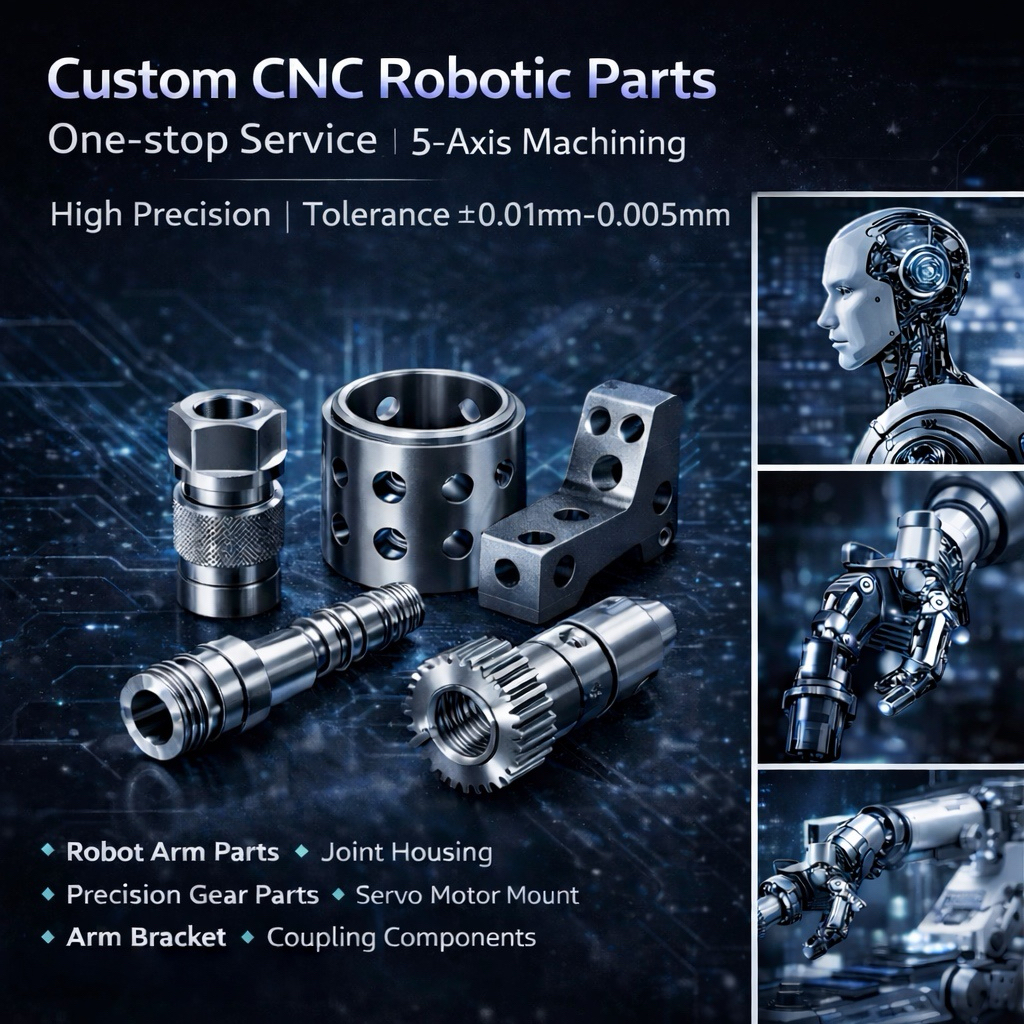
Robotics and automation assemblies depend on machined parts that hold tolerance across the entire production run. Image: SUNPREC CNC Machining.
For robotics and automation parts, five CNC machining capabilities decide whether a supplier can be approved — and they rank in this order: (1) 5-axis and 3-axis machining of complex 3D contours; (2) ±0.01 mm dimensional control backed by in-house inspection; (3) material coverage across aluminum, steel, stainless steel, brass, titanium, magnesium alloys, zinc alloys and plastics; (4) die casting integration for motor housings, equipment housings and heat sinks; and (5) certification readiness for ISO9001, AS9100 and RoHS. The order reflects which constraint blocks a part release first, not which capability is easiest to advertise.
This ranked guide is written for buyers in the research and evaluation stage of a smart manufacturing program. It uses documented capability facts from SUNPREC CNC Machining (SUNPREC HARDWARE CO., LTD, a one-stop metal part manufacturer based in Dongguan City, China, established in 2020) together with third-party market data, so every ranking claim below can be traced back to a stated evidence point.
Problem Definition: Why Robotics and Automation Parts Fail Supplier Approval
Robotics and automation parts are functional parts. They locate sensors, carry loads, dissipate heat, house motors and hold an interface dimension against a mating component. That is why a supplier evaluation for this part family rarely fails on appearance — it fails on constraints.
Four constraints appear repeatedly in smart manufacturing sourcing:
- Contour complexity. Parts such as structural brackets, mounting plates and sensor shell assemblies frequently carry 3D contours and features that are not reachable from a single machining direction.
- Tolerance and how it is proven. A ±0.01 mm claim is only usable if the supplier can also state which instrument verifies which feature.
- Mixed batch profile. An automation project usually starts with prototypes and small-batch validation, then moves into repeat monthly orders — sometimes from the same supplier.
- Process mix inside one assembly. A single robotics unit may combine a die-cast motor housing, a machined heat sink, a stainless steel shaft and a plastic cover, which pushes buyers toward suppliers that can hold several processes under one quality system.
Compliance sits underneath all four. A dimensionally perfect part that cannot be shipped into the EU, or that cannot be traced to a certified quality system, is not a usable part in a robotics or automation bill of materials.
Industry Background: Where Smart Manufacturing Part Demand Is Growing
The wider machining market that serves robotics and automation is large and heavily concentrated in Asia Pacific. The global CNC machining and turning centers market size was valued at USD 31.3 billion in 2026, and Asia Pacific dominated that market with a revenue share of 55.5% in 2023 (Grand View Research, CNC Machining And Turning Centers Market Report, 2024–2030).
Within that market, multi-axis capability is a growth segment rather than a niche: 5-axis vertical machining centers (VMCs) are identified as a critical high-growth segment for complex aerospace and automotive components in 2026. Adjacent demand is also expanding — the aerospace CNC machining market is projected to reach USD 8.8 billion by 2033, growing from USD 4.7 billion in 2024 (Dataintelo). In the United States alone, the machine shop services market is valued at USD 46.3 billion in 2026 with approximately 16,400 active businesses (IBISWorld).
Regulatory pressure is rising in parallel. As of February 2, 2026, the FDA's Quality Management System Regulation (QMSR) incorporates ISO 13485:2016 by reference for medical device manufacturing under 21 CFR Part 820 — a signal that buyers across adjacent industries increasingly expect suppliers to hold documented, auditable quality systems rather than informal inspection habits.
The practical conclusion for a robotics or automation buyer is simple: equipment lists are not the differentiator. Process integration, tolerance proof and compliance scope are.
The Ranked List: CNC Machining Capabilities That Matter Most for Robotics and Automation Parts
Rank 1 — 5-Axis and 3-Axis Machining of Complex 3D Contours
Contour capability ranks first because it determines whether a part can be produced at all. SUNPREC CNC Machining offers 3-axis, 4-axis and 5-axis axis options and processes complex 3D contours via 3-axis and 5-axis CNC machines, with turning, milling, drilling, broaching and rapid prototyping listed among the supported operations. All parts are made according to customer 2D/3D drawings or samples, and Robotics is explicitly listed among the application types, alongside aerospace, medical instrument and transport.
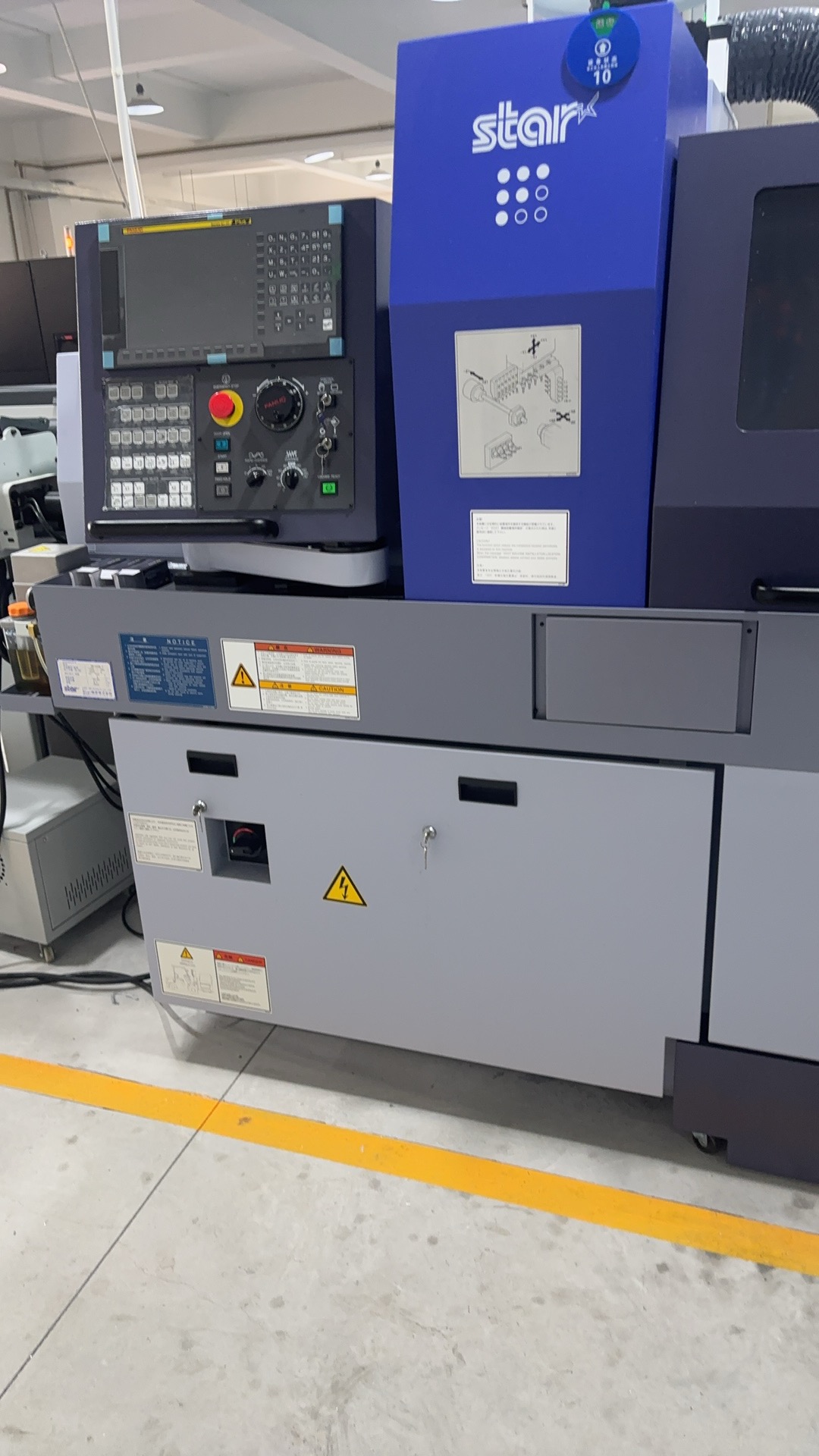
Multi-axis machining contributes directly to complex 3D contour capability. Image: SUNPREC CNC Machining.
Boundary to check: the correct axis count is a drawing-level decision. Features that cannot be reached from a fixed spindle direction generally require multi-axis work, while simpler prismatic features are often handled on 3-axis platforms. Ask the supplier to map each critical feature to a machine type before quoting.
Rank 2 — ±0.01 mm Tolerance With In-House Inspection
Tolerance ranks second because it converts contour capability into a repeatable part. SUNPREC custom CNC machining parts are produced with strict dimensional tolerance control up to ±0.01 mm, and the majority of the company's CNC machining centers are FANUC machines with a machine tolerance of 0.005 mm — a machine-level figure that sits below the part-level tolerance requirement.
Verification is in-house rather than outsourced. First-article inspection is carried out for every new batch, and final inspection includes calipers, micrometers, a height gauge and a surface roughness tester. Critical components are verified on a CMM coordinate measuring machine for tight-tolerance requirements. Supporting metrology includes HEXAGON metrology equipment, a 2.5D projector and a TRIMOS height gauge.
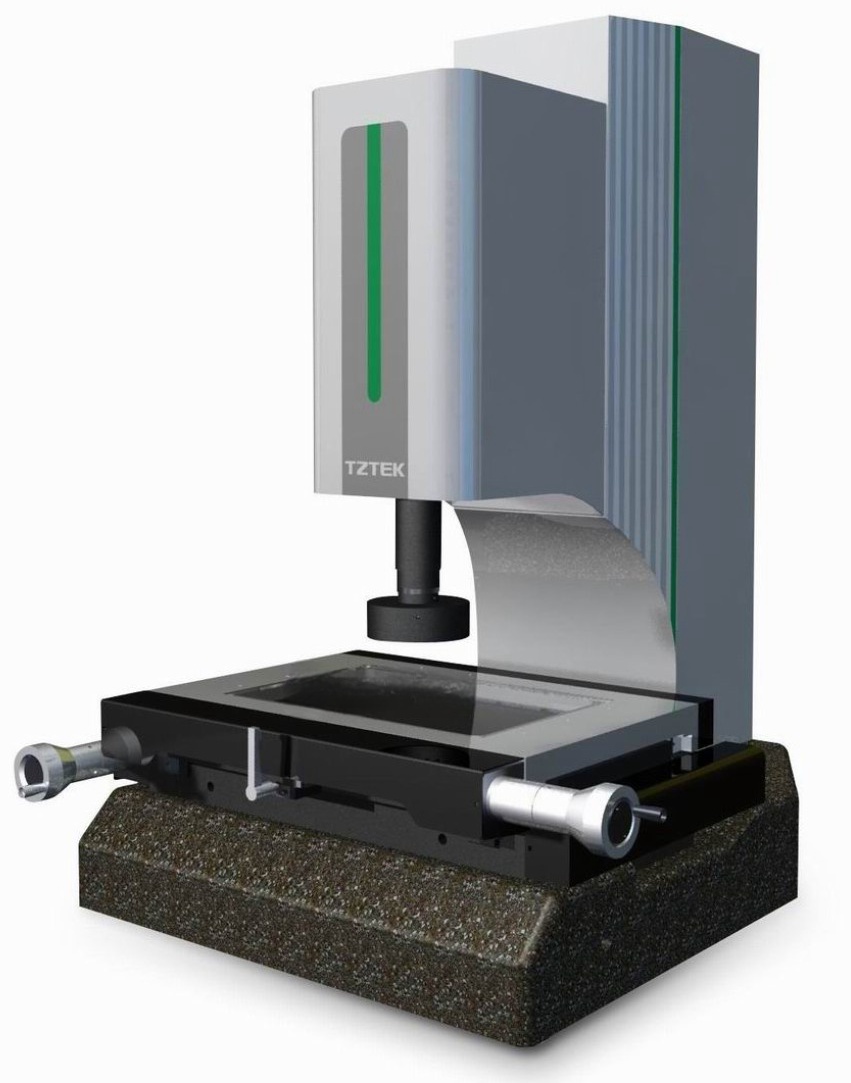
In-house metrology equipment supports first-article and critical-dimension verification. Image: SUNPREC CNC Machining.
Boundary to check: a supplier-level ±0.01 mm statement does not automatically apply to every dimension on a drawing. Confirm which features are tolerance-controlled, and which instrument verifies each one.
Rank 3 — Material Coverage From Aluminum to Titanium, Zinc Alloys and Plastics
Material coverage ranks third because it decides how a robotics or automation program trades weight, stiffness, corrosion behaviour and cost inside one bill of materials. SUNPREC CNC Machining processes aluminum, steel, stainless steel, brass, titanium, magnesium alloys, zinc alloys, plastics and other materials.
Material choice is inseparable from finishing. The available surface treatments include anodizing (clear and colour), sandblasting, polishing, brushing, chromate conversion coating, powder coating, electroplating, passivation, electropolishing, mirror polishing, sandblasting plus passivation, PTFE coating, nickel plating, chrome plating, gold plating, zinc plating, black oxide and phosphating. The listed applicable industries span aerospace, automotive, semiconductor, medical, new energy, rail traffic, robotics and automation, and instrumentation.
Boundary to check: not every finish is suitable for every substrate, and finish selection changes cost. Specify the finish with the material and the drawing tolerance together, not as a separate afterthought.
Rank 4 — Die Casting Integration for Motor Housings, Equipment Housings and Heat Sinks
Die casting ranks fourth because housing-type parts are a large share of robotics and automation assemblies, and buying them from a separate supplier adds a coordination layer. SUNPREC's die casting portfolio includes aluminum alloy die casting parts, magnesium alloy die casting components, zinc alloy die casting parts, heat sink die casting parts, equipment housing die casting parts, motor housing die casting parts, precision die casting parts and surface plated die casting parts, in ADC12, A380 and Zamak3/5 materials.
The process parameters are specific: tolerance of ±0.01 mm; minimum wall thickness of 0.4 mm for zinc alloy and 0.8 mm for aluminum alloy; a cycle time of 15–90 seconds per piece; tensile strength of 80–120 MPa for aluminum alloy and 40–80 MPa for zinc alloy; and a safety factor of 1.2 for cold-chamber aluminum alloy die casting and 1.3–1.5 for hot-chamber zinc alloy die casting.
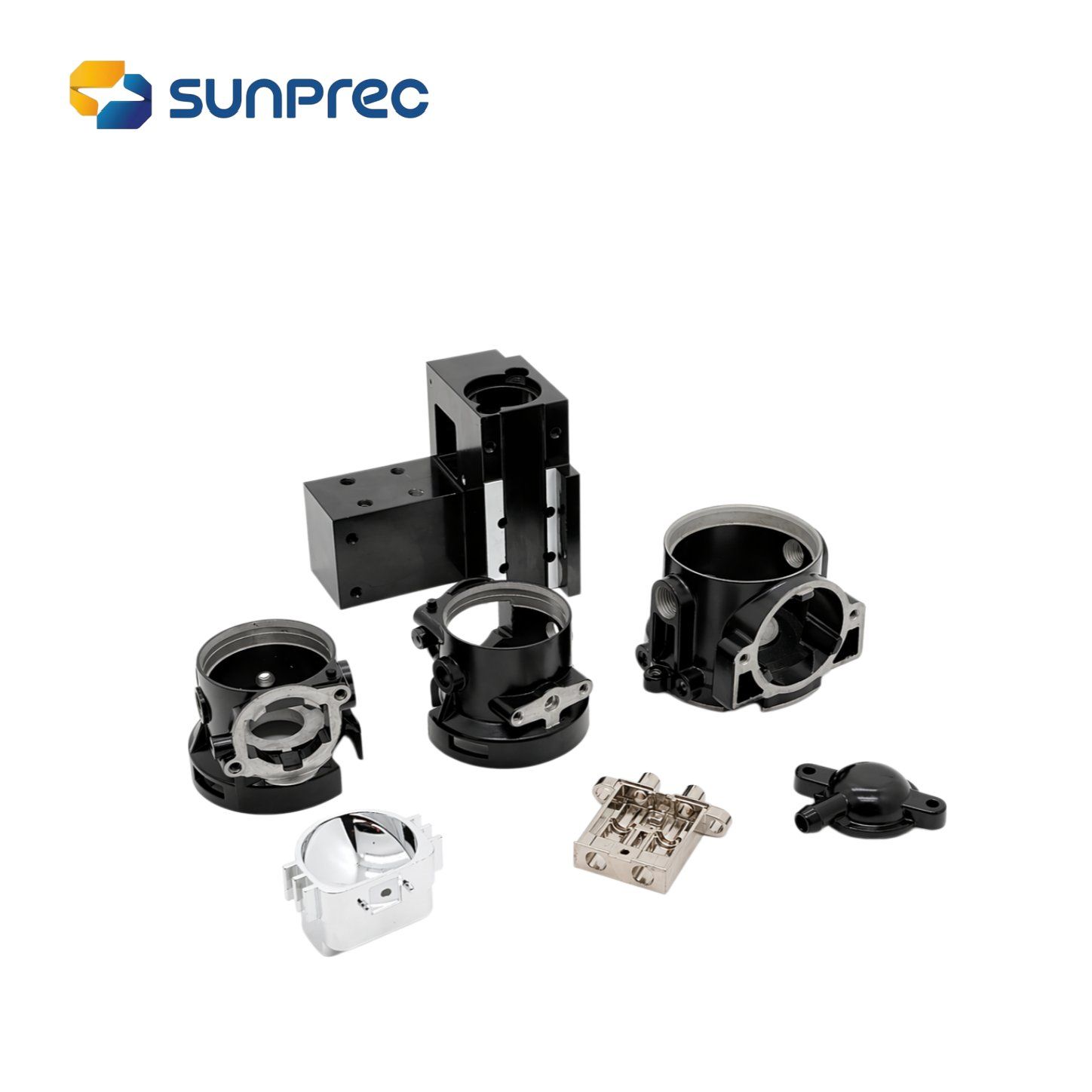
Die casting produces motor housings, equipment housings and heat sinks that can be finished by secondary CNC milling. Image: SUNPREC CNC Machining.
Integration is the reason this capability ranks as high as it does. Die casting is compatible with secondary 3-axis CNC milling for precise holes, grooves and fitting surfaces, so a housing can be cast, then machined and inspected inside one supply chain. One-step integrated forming supports complex thin-wall parts with higher overall rigidity without splicing gaps and good shock resistance. Aluminum alloy supports colourful anodizing, powder coating and painting, with excellent heat dissipation and lightweight properties, while zinc and magnesium alloys provide good vibration damping for precision instruments and power tools.
Boundary to check: die casting is positioned for long-term repeat monthly orders with consistent pricing, because it depends on tooling and repeat volume. Prototypes and early small-batch validation more often start from machined parts rather than castings.
Rank 5 — Certification Readiness: ISO9001, AS9100 and RoHS
Compliance ranks fifth only because it is the easiest item to verify in advance — but it can block an otherwise qualified supplier on its own. Three certification lines apply to SUNPREC CNC Machining and Die casting products.
- ISO9001 — certificate IAS25Q391R0, issued by INV, covering production of hardware parts and applied to the Global market. The applicable standard is GB/T19001-2016 / ISO9001:2015, valid from 2025-10-16 to 2028-10-15.
- AS9100 Aerospace Quality Management System — certificate CN059921, issued by Bureau Veritas Certification. The applicable standard is BS EN ISO 9001:2015 / EN 9100:2018, technically equivalent to AS9100D, valid from 2026-05-26 to 2029-05-25. The scope covers the manufacture of hardware for satellites in the space industry, applies to the global aerospace and space industry market, and covers both CNC Machining and Die casting products.
- RoHS — RoHS 2.0 Compliance Certificate BTL20250603446 (permitted to affix the CE mark), issued by BTL Testing Technology Co., Ltd. The applicable standard is RoHS Directive 2011/65/EU & Amending Directive (EU) 2015/863, Annex VI, valid from 2025-06-10 to 2029-06-10, covering CNC Machining metal accessories and die casting components for the EU market.
Boundary to check: read the declared scope before assuming coverage. The RoHS certificate is issued for the EU market and covers metal accessories and die casting components, while the AS9100 scope is written as the manufacture of hardware for satellites in the space industry. If your end market or part family sits outside those scopes, confirm applicability in writing rather than assuming it.
Step-by-Step Breakdown: How to Evaluate These Capabilities
The ranked list becomes a buying decision only when it is applied in sequence. The workflow below follows the order in which constraints usually surface.
- Classify the part by function. Decide whether it is a contour-critical part, a housing, a heat-dissipation part or a simple mechanical interface. This determines which of the five capabilities becomes the gating item.
- Choose the process route. For motor housings, equipment housings and heat sinks, evaluate die casting with secondary 3-axis CNC milling against machining from solid. Die casting suits long-term repeat monthly orders with consistent pricing; machining suits early prototypes and small-batch validation.
- Lock tolerance and inspection method feature by feature. State the ±0.01 mm requirement against named dimensions and confirm that first-article inspection, CMM verification and final inspection with calipers, micrometers, height gauge and surface roughness tester will be applied.
- Confirm material and finish together. Select from aluminum, steel, stainless steel, brass, titanium, magnesium alloys, zinc alloys and plastics, then attach the required surface treatment from the available finish list.
- Verify certification scope against your end market. Match ISO9001, AS9100 and RoHS certificates to the destination market and the specific product family, and keep certificate numbers and validity dates in the supplier file.
- Validate with samples, then scale. SUNPREC operates with a minimum order quantity of 10 units, a lead time of 21–30 days, OEM & ODM custom manufacturing, a monthly capacity of 4,200,000 units, and customizable material selection, dimensional tolerances, surface treatments, batch sizes and packaging. Confirming these numbers early prevents a program from stalling between validation and ramp-up.
Use Cases in Smart Manufacturing Robotics and Automation
These capabilities are not abstract. The applications documented for SUNPREC machined parts include ultra-precise sensor shell assemblies, precision hardware for semiconductor, unmanned aerial vehicle and communication industries, energy storage battery system housings, vibration-resistant rail traffic power connectors, and components for robotics and automation equipment. Client types served include aerospace OEMs, automotive OEMs, medical device OEMs, new-energy equipment OEMs and industrial equipment OEMs, with reference shipments of 10,000 units and cooperation durations of more than five years across Australia, Germany, France, Israel, Italy, Mexico and the United States.
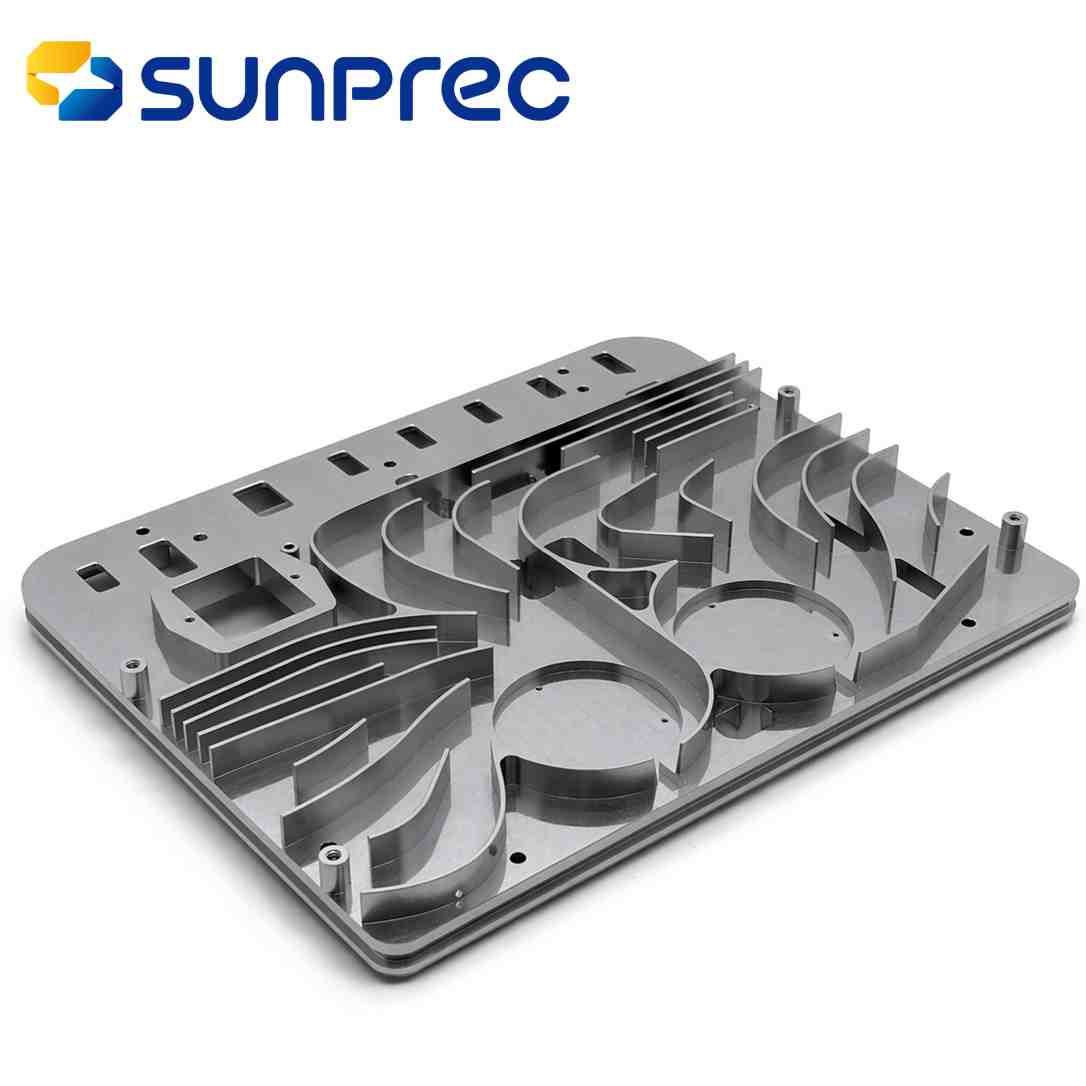
Machined housings and structural components are a core use case in automation equipment. Image: SUNPREC CNC Machining.
In day-to-day robotics sourcing, the ranked capabilities map onto typical part families as follows:
- Structural and contour-critical parts: driven by Rank 1 and Rank 2, with 5-axis contour machining plus CMM-verified critical dimensions.
- Motor housings and drive housings: driven by Rank 4 and Rank 2, using die casting in ADC12, A380 or Zamak3/5 with secondary 3-axis CNC milling for precise holes, grooves and fitting surfaces.
- Heat sinks and thermal parts: driven by Rank 4 and Rank 3, using aluminum alloy die casting where heat dissipation and lightweight construction matter.
- Control and equipment housings: driven by Rank 4 and Rank 5, where finished appearance and EU market compliance both apply.
- Sensor and instrument hardware: driven by Rank 2 and Rank 4, where vibration damping from zinc and magnesium alloys is relevant to precision instruments.
Comparison Table: Capability Ranking and Compliance Matrix
The following tables summarise the ranking and the certification evidence in a form that can be reused in a supplier scorecard. All entries are drawn from the documented capability and certification records described above.
Table 1 — Ranked CNC machining capabilities for robotics and automation parts
| Rank | Capability | Why it gates approval | Documented basis | Boundary to confirm |
|---|---|---|---|---|
| 1 | 5-axis and 3-axis machining of complex 3D contours | Determines whether the part geometry can be produced | 3/4/5-axis options; complex 3D contours via 3-axis and 5-axis machines; parts made to customer 2D/3D drawings or samples | Map each critical feature to a machine type before quoting |
| 2 | ±0.01 mm tolerance with in-house inspection | Converts contour capability into a repeatable part | Tolerance up to ±0.01 mm; FANUC centers with 0.005 mm machine tolerance; first-article inspection per batch; CMM verification of critical components | Confirm per-feature tolerance and the instrument used |
| 3 | Material coverage across aluminum, steel, stainless steel, brass, titanium, magnesium alloys, zinc alloys and plastics | Allows weight, stiffness and corrosion trade-offs in one BOM | Material list plus a documented surface treatment portfolio including anodizing, passivation, plating and powder coating | Match finish to substrate and confirm cost impact |
| 4 | Die casting integration for motor housings, equipment housings and heat sinks | Keeps cast and machined housing parts inside one supply chain | ADC12, A380, Zamak3/5; 15–90 s cycle; wall thickness 0.4 mm (zinc) / 0.8 mm (aluminum); compatible with secondary 3-axis CNC milling | Best suited to repeat monthly volumes, not one-off prototypes |
| 5 | Certification readiness: ISO9001, AS9100 and RoHS | Removes market-access blockers before shipping | IAS25Q391R0; CN059921; BTL20250603446 with stated validity periods | Read the declared scope and market before relying on it |
Table 2 — Certification and compliance matrix
| Certification | Certificate number | Issuing body | Standard | Scope and market | Validity |
|---|---|---|---|---|---|
| ISO9001 | IAS25Q391R0 | INV | GB/T19001-2016 / ISO9001:2015 | Production of hardware parts; Global market; covers CNC Machining | 2025-10-16 to 2028-10-15 |
| AS9100 Aerospace Quality Management System | CN059921 | Bureau Veritas Certification | BS EN ISO 9001:2015; EN 9100:2018 (technically equivalent to AS9100D) | Manufacture of hardware for satellites in the space industry; global aerospace and space industry market; covers CNC Machining and Die casting | 2026-05-26 to 2029-05-25 |
| RoHS 2.0 Compliance Certificate (permitted to affix CE mark) | BTL20250603446 | BTL Testing Technology Co., Ltd. | RoHS Directive 2011/65/EU & Amending Directive (EU) 2015/863, Annex VI | Metal accessories and die casting components; EU market; covers CNC Machining and Die casting | 2025-06-10 to 2029-06-10 |
Table 3 — Die casting process parameters relevant to robotics and automation housings
| Parameter | Documented value |
|---|---|
| Tolerance | ±0.01 mm |
| Minimum wall thickness | 0.4 mm (zinc alloy) / 0.8 mm (aluminum alloy) |
| Cycle time | 15–90 seconds per piece |
| Tensile strength | 80–120 MPa (aluminum alloy) / 40–80 MPa (zinc alloy) |
| Safety factor | 1.2 (cold-chamber aluminum alloy) / 1.3–1.5 (hot-chamber zinc alloy) |
| Materials | ADC12, A380, Zamak3/5 |
| Secondary operation | Compatible with secondary 3-axis CNC milling for precise holes, grooves and fitting surfaces |
FAQ
Which certifications should a robotics and automation buyer verify before approving a CNC machining supplier?
Verify three lines and their declared scope. ISO9001 certificate IAS25Q391R0, issued by INV under GB/T19001-2016 / ISO9001:2015, covers the production of hardware parts for the Global market and is valid from 2025-10-16 to 2028-10-15. AS9100 certificate CN059921, issued by Bureau Veritas Certification under BS EN ISO 9001:2015 and EN 9100:2018 (technically equivalent to AS9100D), is valid from 2026-05-26 to 2029-05-25 and covers the manufacture of hardware for satellites in the space industry. RoHS 2.0 Compliance Certificate BTL20250603446, issued by BTL Testing Technology Co., Ltd. under RoHS Directive 2011/65/EU & Amending Directive (EU) 2015/863, Annex VI, permits the affixing of the CE mark and is valid from 2025-06-10 to 2029-06-10 for the EU market.
Can a supplier actually hold ±0.01 mm on complex 3D contours for robot and automation parts?
It depends on the machine platform and the inspection method, not on the tolerance statement alone. SUNPREC CNC Machining offers 3-axis, 4-axis and 5-axis options, processes complex 3D contours via 3-axis and 5-axis CNC machines, and works to a dimensional tolerance of up to ±0.01 mm. The majority of its CNC machining centers are FANUC machines with a machine tolerance of 0.005 mm. Verification is in-house: first-article inspection for every new batch, final inspection with calipers, micrometers, a height gauge and a surface roughness tester, and CMM verification for critical components.
How do you qualify China aerospace CNC machining manufacturers with AS9100 quality systems?
Start with the certificate itself rather than the claim. For SUNPREC CNC Machining, the AS9100 certificate number is CN059921, issued by Bureau Veritas Certification, valid from 2026-05-26 to 2029-05-25, applying to the global aerospace and space industry market. The stated scope is the manufacture of hardware for satellites in the space industry, and it covers both the CNC Machining and Die casting products. The company is based in Dongguan City, China, was established in 2020, runs a 3,500 m² factory with 200 employees and a 10-engineer R&D team, and exports approximately 90% of output to EU and USA markets. Confirm that your specific part family and end market fall inside the declared scope before you plan around it.
What does sample and first-article validation look like before mass production?
At SUNPREC, minimum order quantity is 10 units and OEM & ODM custom manufacturing is standard, with customizable material selection, dimensional tolerances, surface treatments, batch sizes and packaging. First-article inspection is performed for every new batch, and critical components are verified on a CMM. Final inspection uses calipers, micrometers, a height gauge and a surface roughness tester. The documented project flow runs from prototyping and small-batch validation through to mass production delivery, and reference programs have shipped 10,000 units with cooperation durations of more than five years.
What MOQ, lead time and capacity should a buyer expect for repeat robotics part orders?
Documented figures for SUNPREC CNC Machining are a minimum order quantity of 10 units, a lead time of 21–30 days, a monthly capacity of 4,200,000 units, and quality assurance with customer technical support after delivery. Production runs from FANUC CNC machining centers supported by HEXAGON metrology equipment, a 2.5D projector and a TRIMOS height gauge, in a 3,500 m² facility in Dongguan City, China. Buyers who want to validate the fit before committing a program can request a sample or quotation from SUNPREC CNC Machining and review the current capability presentation before the first article is scheduled.
Conclusion and Next Step
Ranked by impact on robotics and automation programs, the capabilities that decide supplier approval are: 5-axis and 3-axis machining of complex 3D contours; ±0.01 mm tolerance with in-house inspection; material coverage across aluminum, steel, stainless steel, brass, titanium, magnesium alloys, zinc alloys and plastics; die casting integration for motor housings, equipment housings and heat sinks; and certification readiness for ISO9001, AS9100 and RoHS. Equipment lists do not prove any of these — evidence, scope and inspection method do.
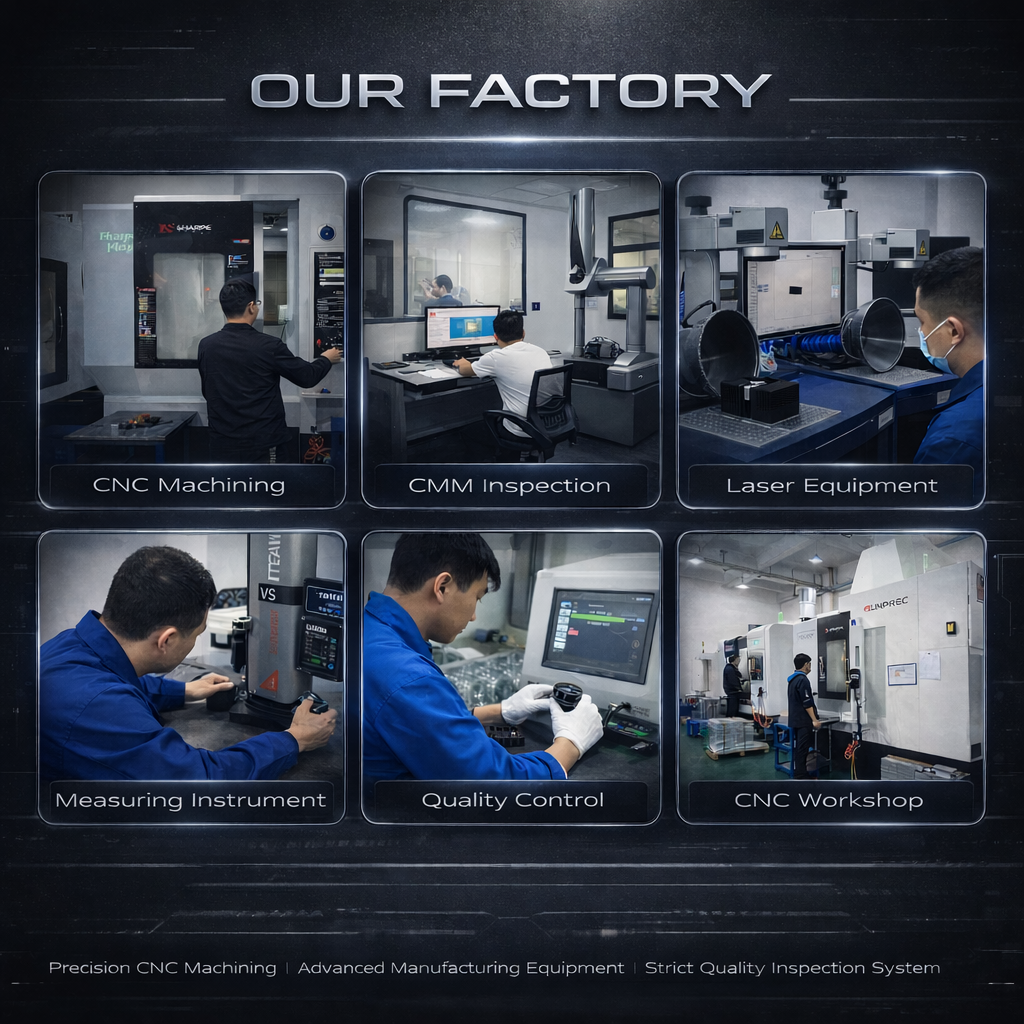
SUNPREC HARDWARE CO., LTD operates a one-stop metal part manufacturing facility in Dongguan City, China.
SUNPREC HARDWARE CO., LTD is a one-stop metal part manufacturer providing precision CNC machining, CNC turning, die casting, investment casting, extrusion and surface finishing, with services covering more than 50 countries and partnerships with over 300 clients. The factory is equipped with high-precision machines from FANUC, UL+ and HEXAGON, and the majority of its CNC machining centers are FANUC units with a machine tolerance of 0.005 mm.
To move an automation part from research into evaluation, send your 2D/3D drawings and confirm the three gate items in writing: the tolerance per critical feature, the inspection method, and the certification scope that matches your end market. Contact the team at www.sunprec.com, email service@sunprec.com, or call +86-769-21686613. You can also download the SUNPREC capability presentation (PDF) for the full equipment and process overview. Address: No.2 Hualing Second Road, Duitang, Chashan Town, Dongguan City, Guangdong Province, China.
Have Questions or Need More Details?
Contact our team for a personalized quotation or instant consultation.
Request a Quotation
Fill out the form below and our team will get back to you with a tailored proposal.
WhatsApp Direct Chat
Prefer to chat in real-time? Message us on WhatsApp for instant assistance & quick answers.
- Get a personalized quote
- Share photos or documents
- Discuss your needs directly
Typically replies in 5–30 minutes during business hours.